

How to Measure Windows for Custom Blinds

Sean Simmonds • November 18, 2026

Share this article

Why Professional Window Measuring Matters for Custom Blinds


Measuring a window for custom blinds may sound simple: grab a tape measure, record the width and height, and order the product. In reality, getting the right fit requires more than two numbers.


Window openings are not always perfectly square. Measurements can vary from the top to the bottom of the same window. Trim, handles, window depth, mounting location, and the type of window treatment can also affect how a product should be measured.


For custom blinds and shades, even a small measuring mistake can affect fit, light gaps, privacy, appearance, and operation.


That's why Simmonds Blinds and Drapes provides professional measuring as part of the custom window treatment process for homeowners throughout Owensboro, Bowling Green, Beaver Dam, and surrounding Western Kentucky communities.


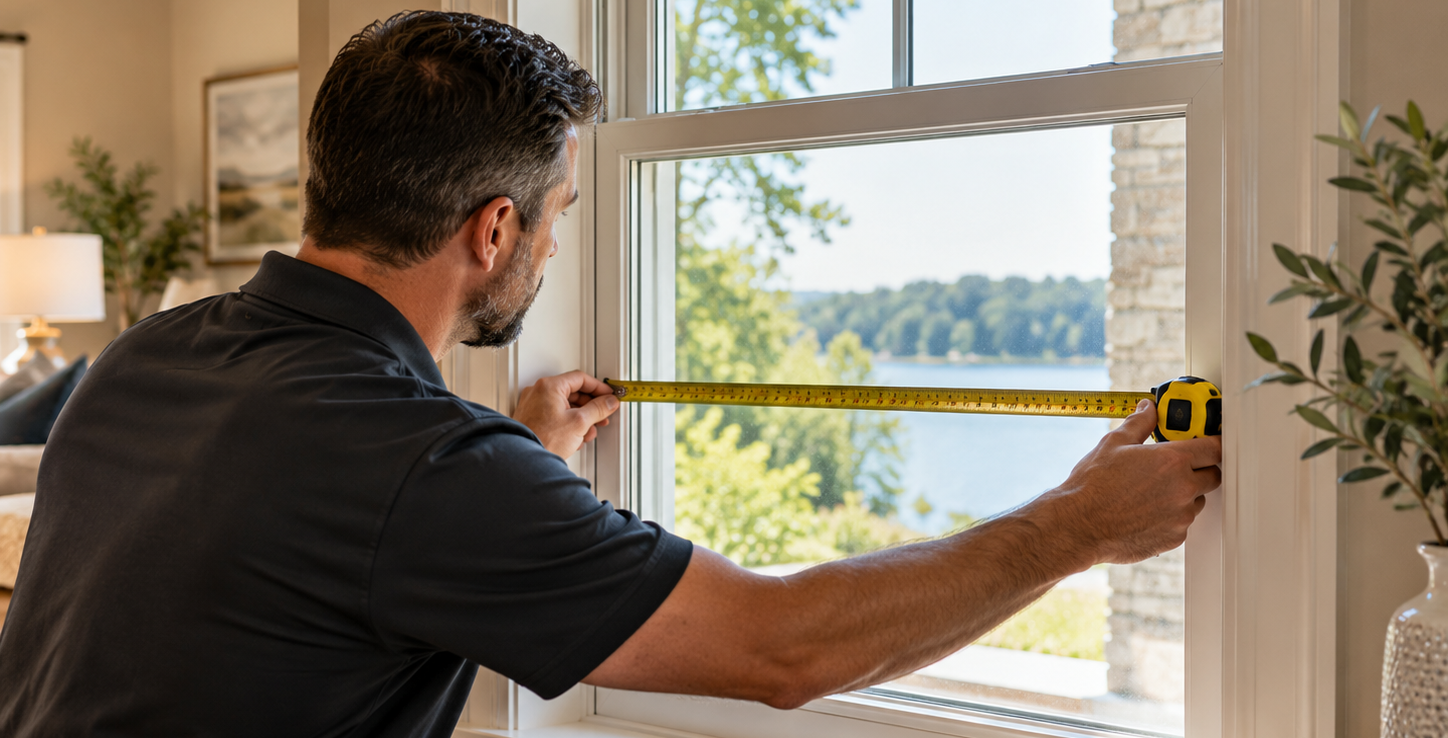
Person measuring a window frame with a tape measure, looking out toward a lake view.

How Do You Measure Windows for Custom Blinds?


To measure for custom blinds, you first need to determine whether the treatment will be installed inside the window opening or outside of it. Then measure the width and height in multiple locations using a steel tape measure.


For a basic inside-mount measurement:


  1. Measure the width near the top of the opening.
  2. Measure the width through the middle.
  3. Measure the width near the bottom.
  4. Measure the height on the left side.
  5. Measure the height through the center.
  6. Measure the height on the right side.
  7. Record every measurement accurately without rounding.


For an outside mount, measurements need to account for how far beyond the window opening the treatment should extend.


But these measurements are only the beginning.


The correct measuring method can vary according to the product, manufacturer, mounting style, window construction, and desired amount of coverage. This is why measurements taken for one type of blind or shade should not automatically be assumed to work for another.


What Is the Difference Between Inside-Mount and Outside-Mount Blinds?


Inside-mount blinds are installed within the window opening, while outside-mount treatments are installed on the trim, wall, or another surface surrounding the window.


Inside Mount

An inside mount creates a clean, built-in appearance because the treatment sits within the window opening.


It can work well when:


  • The window has sufficient mounting depth
  • Trim or molding should remain visible
  • The opening is relatively square
  • A streamlined appearance is preferred


However, the available depth has to accommodate the product and its hardware.


Outside Mount


An outside-mounted window treatment covers the window opening from the outside.


An outside mount may be useful when:


  • The window is too shallow for an inside mount
  • More coverage is desired
  • Light gaps need to be reduced
  • The window opening is unusually shaped or uneven
  • The homeowner wants to visually change the proportions of the window


Neither mounting method is automatically better. The right choice depends on the window and the selected treatment.


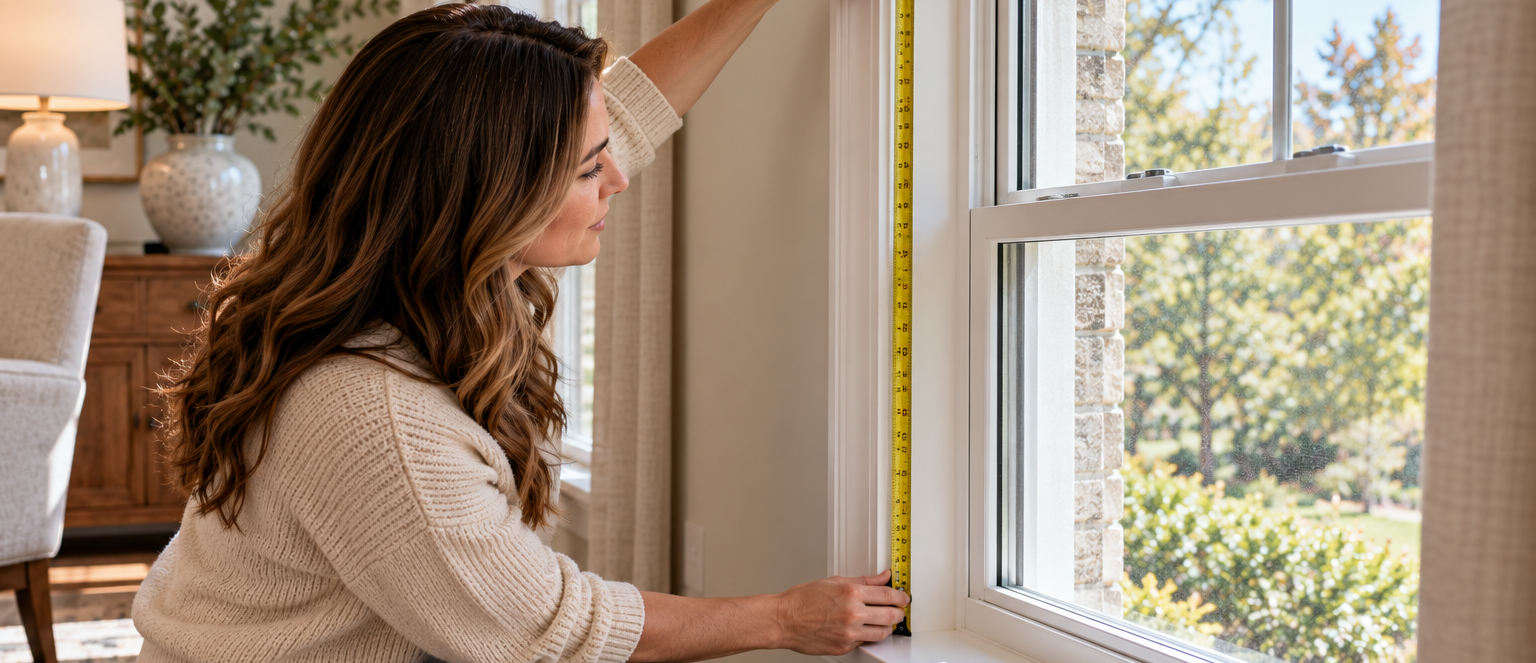
Woman measuring a window with a tape measure in a sunlit room

Why Should You Measure a Window in More Than One Place?


You should measure a window in several places because many window openings are not perfectly square.

A window may be slightly wider at the top than at the bottom or taller on one side than the other. These differences may be small enough that they are not obvious until a custom treatment is installed.


Multiple measurements reveal these variations before the product is ordered.


Professionals typically evaluate the opening at several points because the manufacturer may require specific measurements based on the product and mounting method.


This is one reason simply measuring the center of a window can create problems.


A blind that fits perfectly at the widest point may not fit properly through a narrower part of the opening.


Why Does Window Depth Matter for Custom Blinds and Shades?


Window depth matters because an inside-mounted treatment needs enough space for the headrail, brackets, motor, cassette, or other hardware.


Different products require different amounts of mounting space.


For example, the space required for:


may not be identical.


A shallow window could still accommodate certain treatments, but another mounting method or product may work better.


Handles, locks, cranks, and other window hardware can also interfere with a shade or blind.


During an in-home consultation, Simmonds Blinds and Drapes can evaluate these details before recommending a specific product.


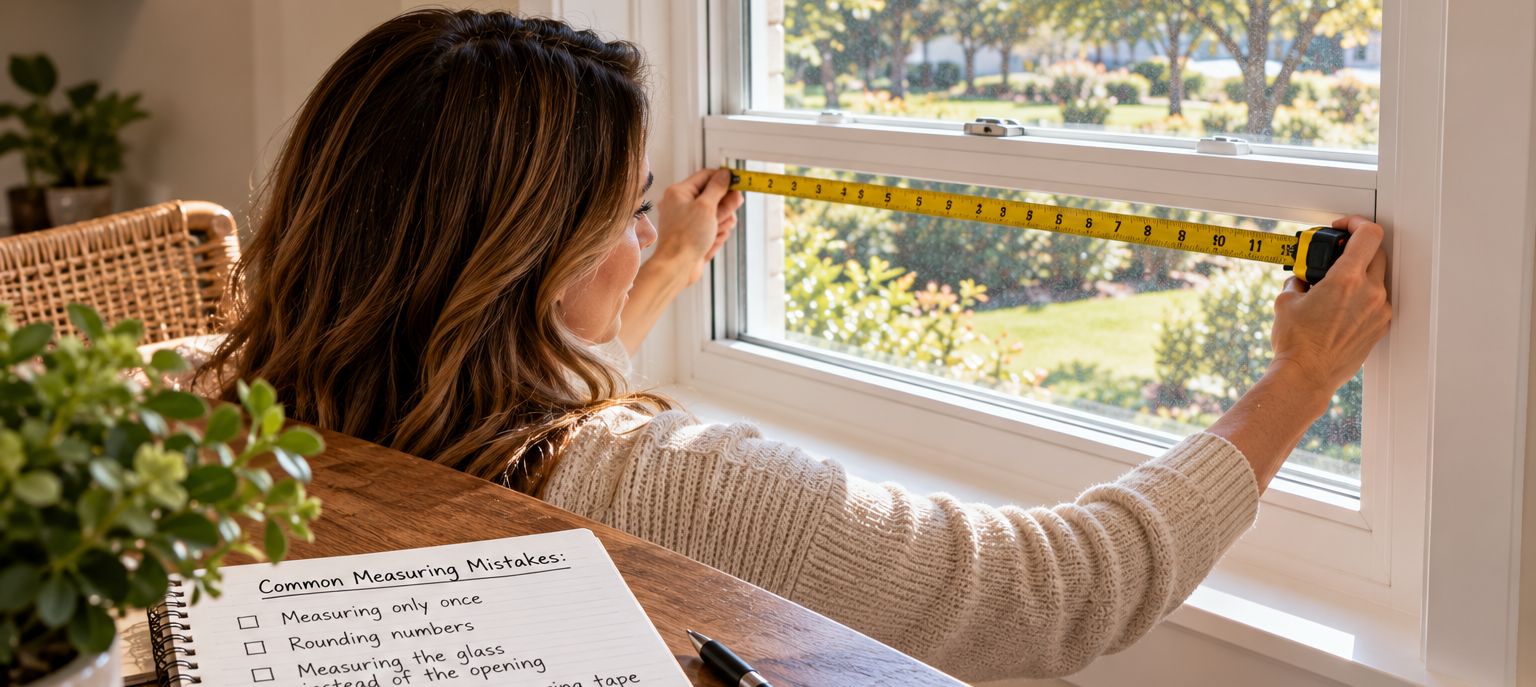
Person measuring a window with a yellow tape measure in a bright room

What Are the Most Common Window

Measuring Mistakes?


The most common measuring mistakes include measuring only once, rounding numbers, overlooking window depth, and assuming every window that looks identical actually has identical dimensions.


Other common problems include:


  • Measuring the glass instead of the required opening
  • Using a flexible fabric measuring tape
  • Measuring only one width and one height
  • Confusing inside-mount and outside-mount dimensions
  • Forgetting about handles or window hardware
  • Assuming several windows are exactly the same size
  • Failing to consider trim and molding
  • Measuring before deciding which product will be installed
  • Trying to make manufacturer deductions yourself


One particularly important point is that homeowners should not automatically subtract from their measurements because they think a blind needs clearance.


Custom window treatment manufacturers may apply their own deductions depending on the product and mounting method.


Providing the wrong measurement because you have already adjusted it can result in a product that does not fit correctly.


Should You Measure Every Window Separately?


Yes. Every window should be measured individually, even when several windows appear to be exactly the same size.


Homes settle. Framing varies. Trim installation can differ slightly from one opening to another.


Two windows that look identical from across the room may have slightly different dimensions.


This becomes especially important when ordering custom blinds or shades for:


  • Groups of living room windows
  • Bedrooms with matching windows
  • Bay windows
  • New construction homes
  • Large open-concept spaces
  • Multiple windows along one wall


Professional measuring documents each individual opening so every treatment is made for the window where it will actually be installed.


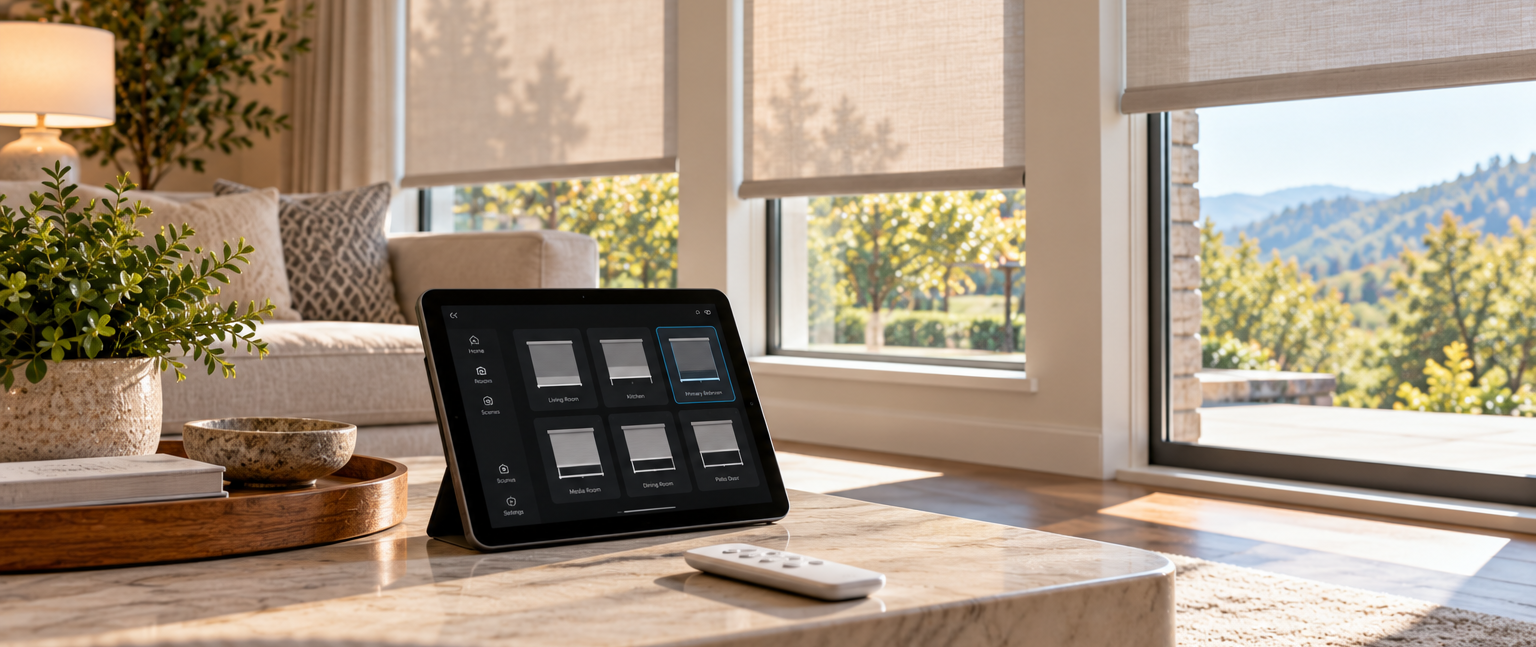
Tablet on a desk in a sunlit living room with a lamp, plant, and mountain view through large windows with motorized roller shades.

Why Is Measuring for Motorized Shades More Complicated?


Motorized shades may require additional planning because the installer needs to consider not only the dimensions of the window but also the motor, headrail or cassette, mounting space, power requirements, and how multiple shades will operate together.


Large and tall windows may introduce additional considerations.


Before ordering motorized window treatments, the professional may need to evaluate:


  • Window width and height
  • Mounting depth
  • Hardware clearance
  • Shade weight and size
  • Power options
  • Access to the window
  • Groups of shades that will operate together
  • Compatible controls or smart home integration


Getting these details right before ordering can prevent complications later.


Motorization is meant to make window treatments easier to use. Professional planning helps ensure that convenience starts with the installation.


Can Incorrect Measurements Affect Privacy

and Light Control?


Yes. Incorrect measurements can create larger gaps around a blind or shade, which may affect privacy and light control.


No standard window treatment necessarily creates a completely light-proof seal around every opening, but accurate measurements help the product provide the coverage it was designed to deliver.


Proper fit is particularly important for:


  • Bedroom blackout shades
  • Bathroom window treatments
  • Street-facing windows
  • Media rooms
  • Nurseries
  • Windows close to neighboring homes


If room darkening is a major priority, measuring is only one part of the process. Product selection and mounting style also matter.


Simmonds Blinds and Drapes can evaluate the complete window and recommend a solution based on the amount of light and privacy control you actually want.


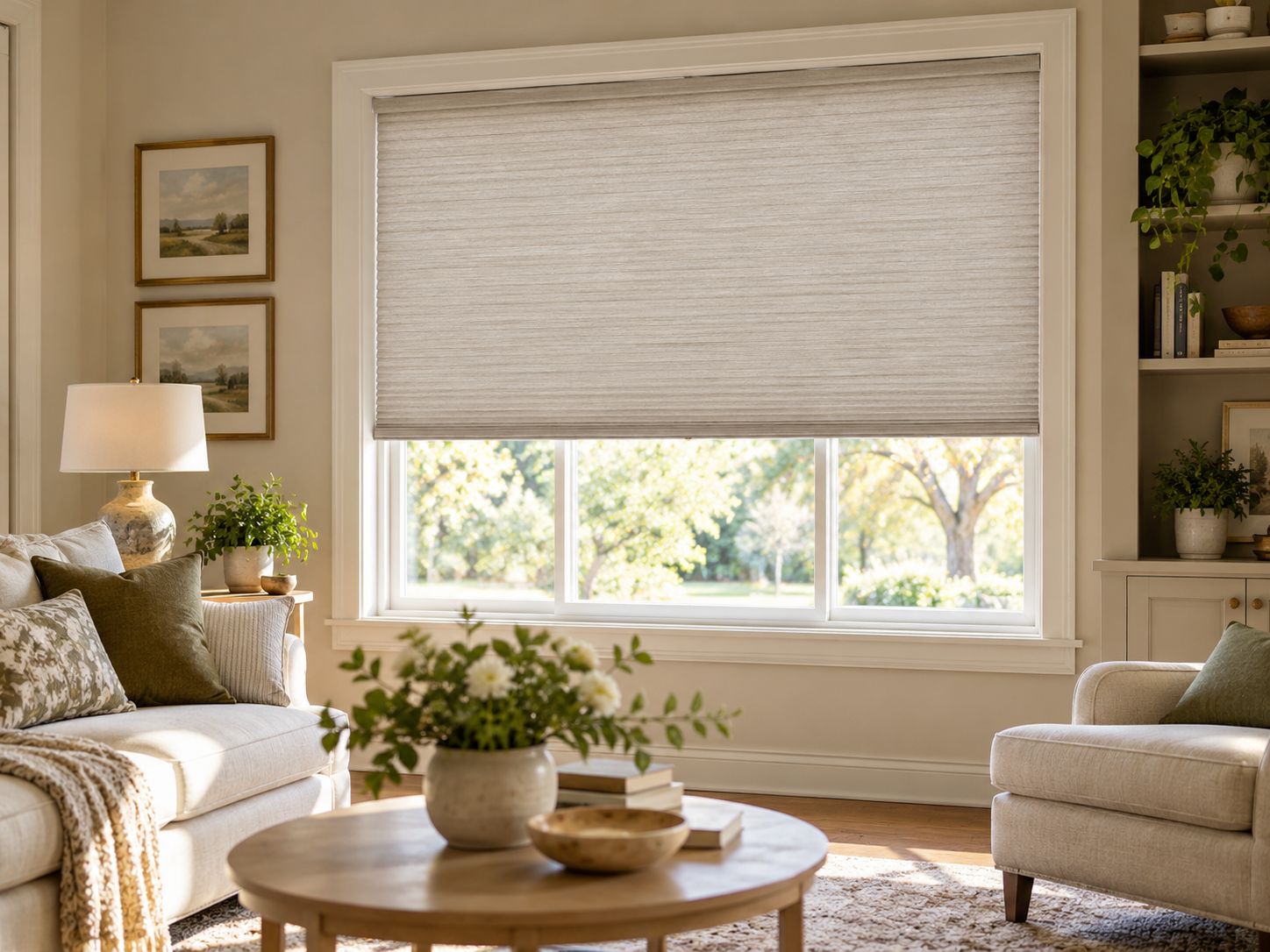
Cozy beige living room with a sofa, armchair, round coffee table, lamp, and a large window with honeycomb shades.

Why Is Professional Window Measuring Worth It?


Professional measuring is worth it because custom window treatments are made specifically for your windows. Accurate measurements help protect that investment before anything is ordered.


Professional measuring helps account for:


  • Window dimensions
  • Uneven openings
  • Mounting depth
  • Trim and molding
  • Window hardware
  • Product specifications
  • Inside or outside mounting
  • Light-control goals
  • Motorization requirements


It also removes the uncertainty of deciding which measurements a manufacturer needs.


With Simmonds Blinds and Drapes, homeowners do not have to measure their windows, order products on their own, and hope everything fits when it arrives.


The process starts in your home.


Sean Simmonds and the team bring the mobile showroom to you, help select the appropriate window treatments, professionally measure the openings, and handle expert installation.


That means the same company is involved from product selection through the finished result.


What Happens During a Professional Window Treatment Consultation?


A professional in-home consultation looks at more than window measurements.


Simmonds Blinds and Drapes can evaluate how each room functions and help homeowners think through:


  • Privacy
  • Natural light
  • Glare
  • Room darkening
  • Style
  • Moisture and humidity
  • Seasonal comfort
  • Motorization
  • Window accessibility


You can also compare product samples in your actual home rather than trying to picture how something seen online or in a store will look.


Colors and materials can appear very different depending on your home's natural light, wall colors, flooring, cabinetry, and furnishings.


Once the appropriate treatment has been selected, professional measurements can be taken according to that specific product and mounting method.


That order matters: choose the right solution first, then measure precisely for it.


Measure Once—and Get the Right Custom Fit


Knowing how windows are measured can help homeowners understand why precision matters. But with custom blinds, window shades, shutters, and motorized window treatments, professional measuring removes much of the risk from the process.


A fraction of an inch, an overlooked window crank, or insufficient mounting depth can change how a custom treatment fits and functions.


Simmonds Blinds and Drapes is a family-owned window treatment company serving Owensboro, Bowling Green, Beaver Dam, and surrounding Western Kentucky communities. With an in-home mobile showroom, professional measuring, and expert installation, the team handles the process from selection to finished installation.


Schedule an in-home consultation and let Simmonds Blinds and Drapes measure your windows professionally so your custom window treatments are made for the spaces where they will actually be installed.


Frequently Asked Questions


  • Q: How do you measure a window for custom blinds?

    A: Start by determining whether the blind will be inside-mounted or outside-mounted. For an inside mount, width and height should generally be checked in multiple locations because window openings may not be perfectly square. Exact manufacturer requirements can vary by product, which is why professional measuring is recommended.

  • Q: Should I measure the glass or the window opening?

    A: The correct measurement depends on the product and mounting method. Measuring only the visible glass is generally not enough for ordering a custom blind or shade. A professional can determine exactly which dimensions are required.

  • Q: Do you measure every window separately for custom blinds?

    A: Yes. Even windows that appear identical can have slightly different dimensions. Each opening should be measured individually before custom treatments are ordered.

  • Q: How much should I subtract from window measurements for blinds?

    A: Homeowners generally should not make their own deductions unless the specific manufacturer instructions require it. Custom manufacturers may make deductions based on the product and mounting method, so adjusting measurements yourself can result in an incorrect fit.

  • Q: Why should I have a professional measure for custom blinds?

    A: Professional measuring accounts for the actual window opening, mounting depth, hardware, trim, product requirements, and installation method. It helps ensure the treatment ordered is appropriate for the window and reduces the risk of costly measuring mistakes.

Recent Posts

Bright living room with three windows, woven shades, and a sofa with pillows and a coffee table.
By Sean Simmonds • November 28, 2026
Compare custom blinds with off-the-shelf window options and discover five reasons professional fit, selection, measuring, and installation can make a difference.
Bright dining room with a round table, wicker chairs, bay windows, and warm candlelight
By Sean Simmonds • November 9, 2026
Discover why faux wood blinds are a durable, moisture-resistant choice for Beaver Dam, Kentucky homes, especially kitchens, bathrooms, and busy living spaces.

Cozy living room with a lit fireplace, decorated Christmas tree, and snowy view through large windows
By Sean Simmonds • November 2, 2026
Discover custom window treatments that make Western Kentucky homes feel warmer and more inviting for the holidays, from drapery and Roman shades to motorized shades.

Cozy living room with a lit Christmas tree, fireplace, and garland-decorated mantel at sunset
By Sean Simmonds • October 28, 2026
Discover how custom drapery can make Kentucky living rooms, dining rooms, and guest spaces feel warmer, more polished, and ready for winter holiday gatherings.
Cozy living room with fireplace, woven shades, neutral sofas, and large windows overlooking a sunset view
By Sean Simmonds • October 21, 2026
Learn how layered shades, interior shutters, and custom drapery can add privacy, comfort, texture, and a warmer, more finished look to Western Kentucky homes.
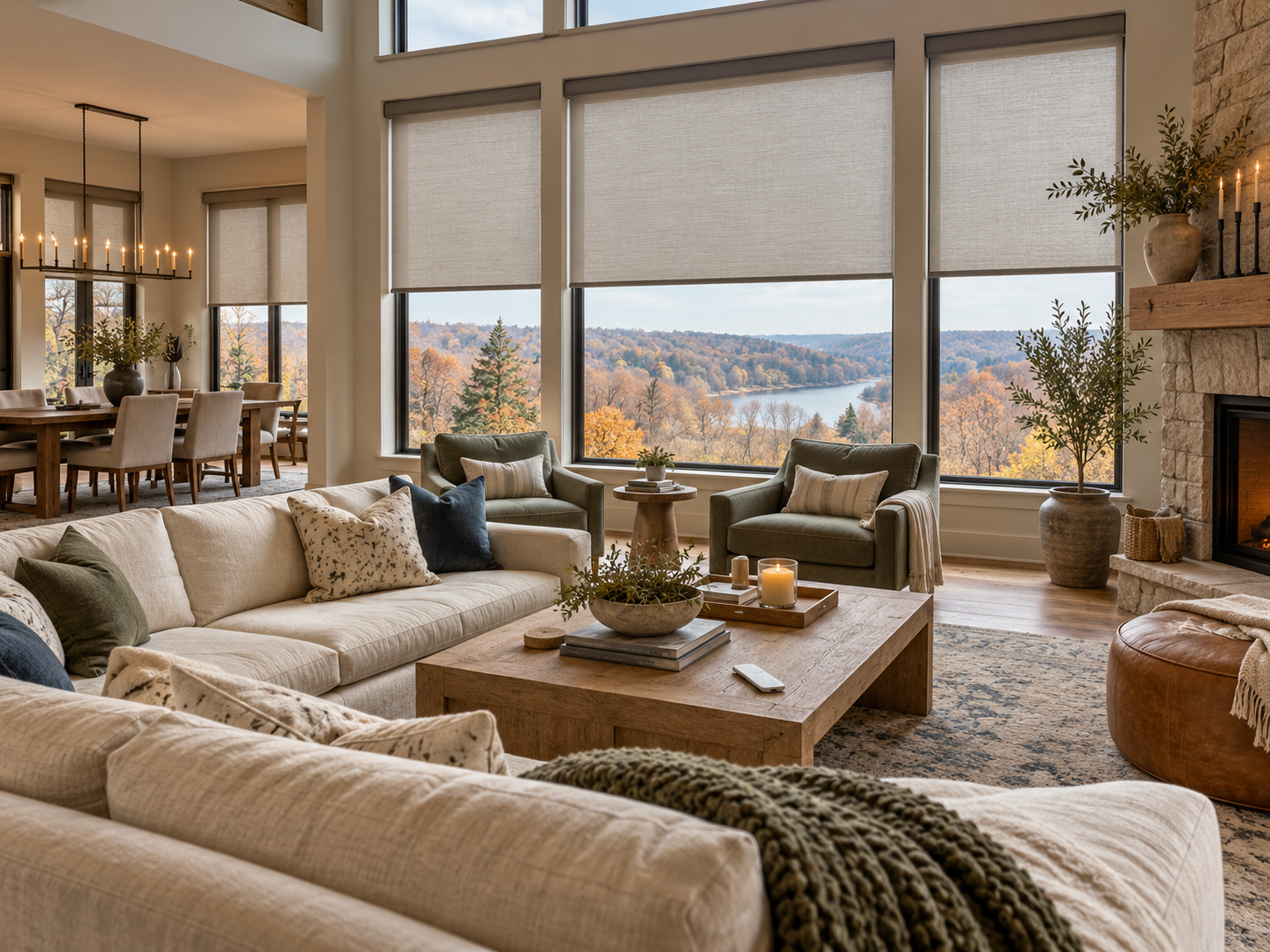
Spacious living room with beige sofas, wooden coffee table, and large windows overlooking a scenic lake view
By Sean Simmonds • October 9, 2026
Discover why motorized shades make shorter fall and winter days easier with convenient light control, nighttime privacy, and optional smart home integration.
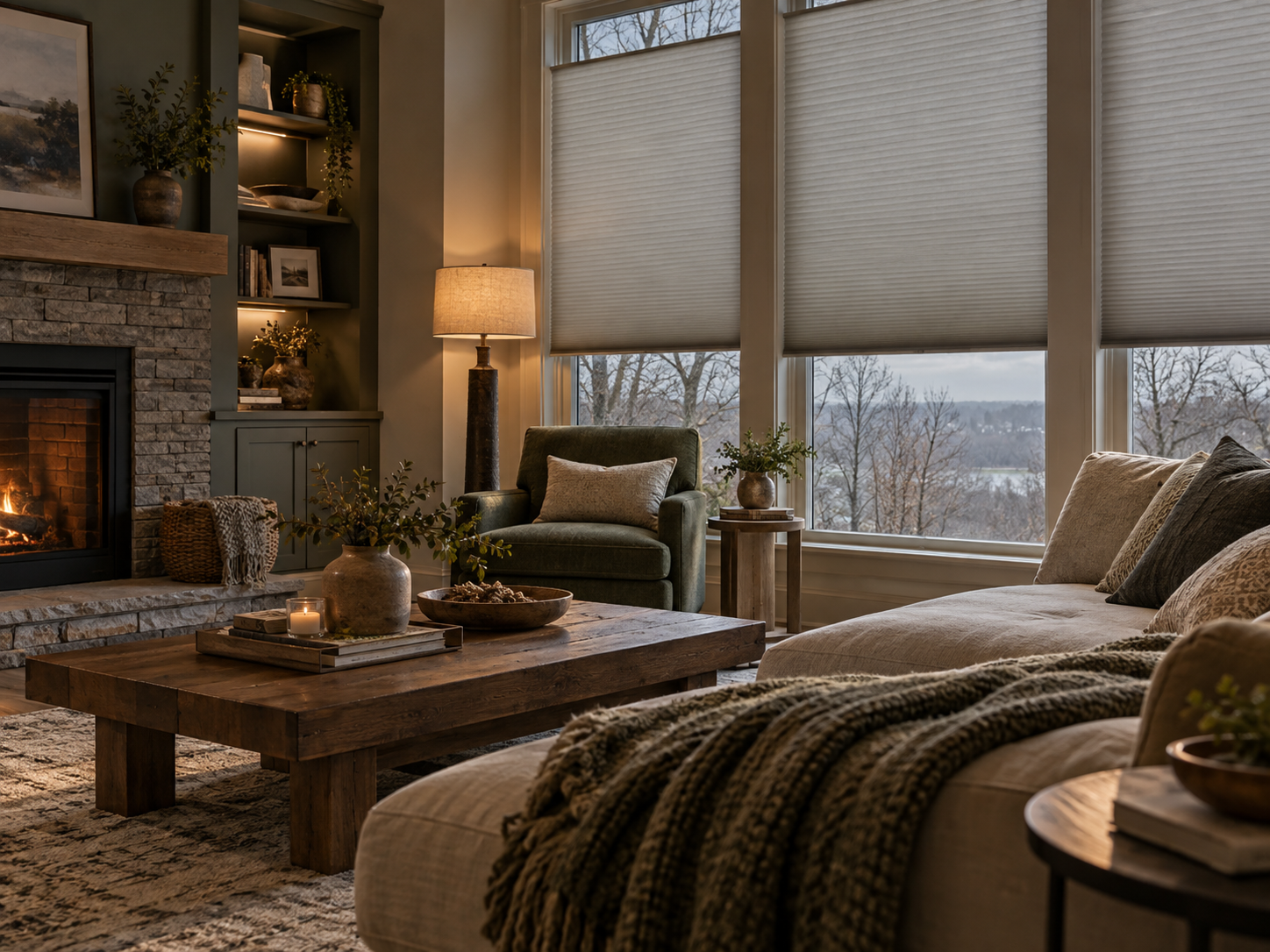
Cozy living room with fireplace, large windows, rustic coffee table, and mountain view at dusk
By Sean Simmonds • October 2, 2026
Learn how cellular shades, shutters, drapery, and other custom window treatments can make drafty or cold-feeling windows more comfortable in Western Kentucky homes.
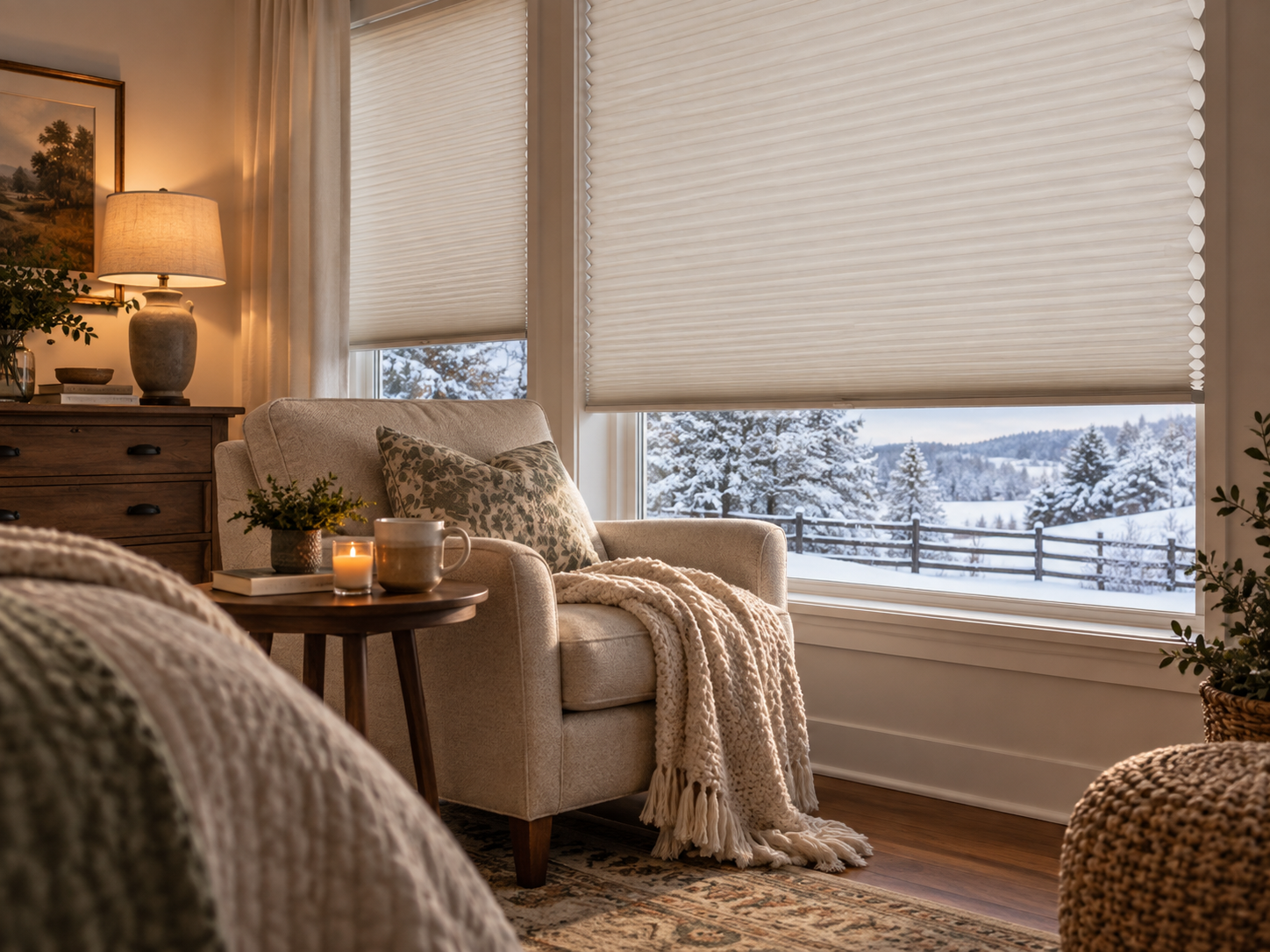
Cozy beige armchair by a snowy window with knitted throw and lamp in a warm living room
By Sean Simmonds • September 29, 2026
Do cellular shades help insulate drafty windows? Learn how honeycomb shades improve winter comfort, privacy, insulation, and light control in Western Kentucky homes.
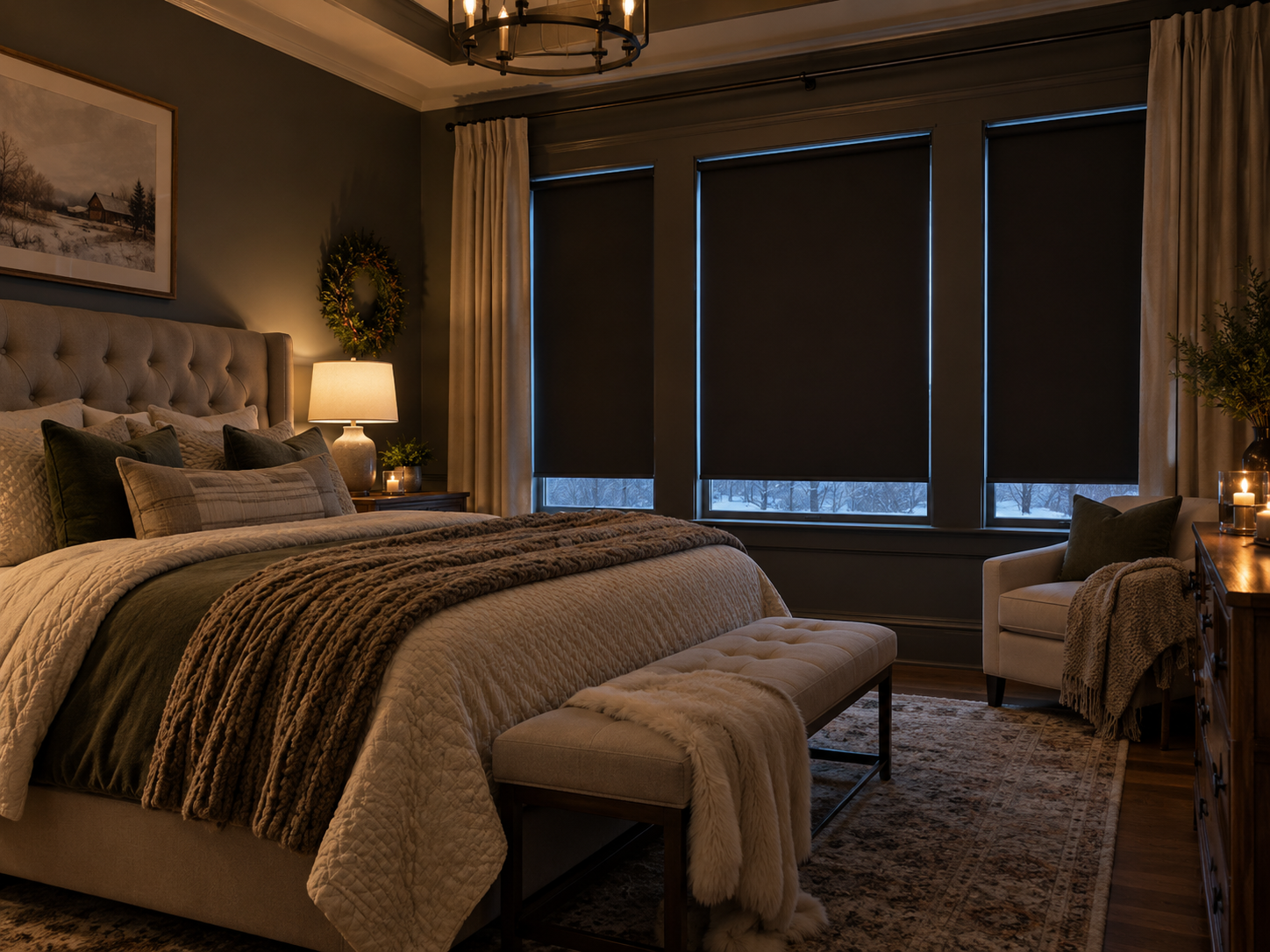
Cozy bedroom with a tufted bed, bench, warm lighting, and dark window shades
By Seean Simmonds • September 22, 2026
Discover why blackout shades work well in Kentucky bedrooms during winter. Compare roller, cellular, Roman, and motorized options for privacy, darkness, and comfort.
Cozy beige bedroom with large windows, a bed, bench, and soft neutral decor overlooking a snowy view
By Sean Simmonds • September 17, 2026
Discover energy-efficient window treatments for Kentucky winters, including cellular shades, drapery, interior shutters, Roman shades, and motorized shade options.

Show More