

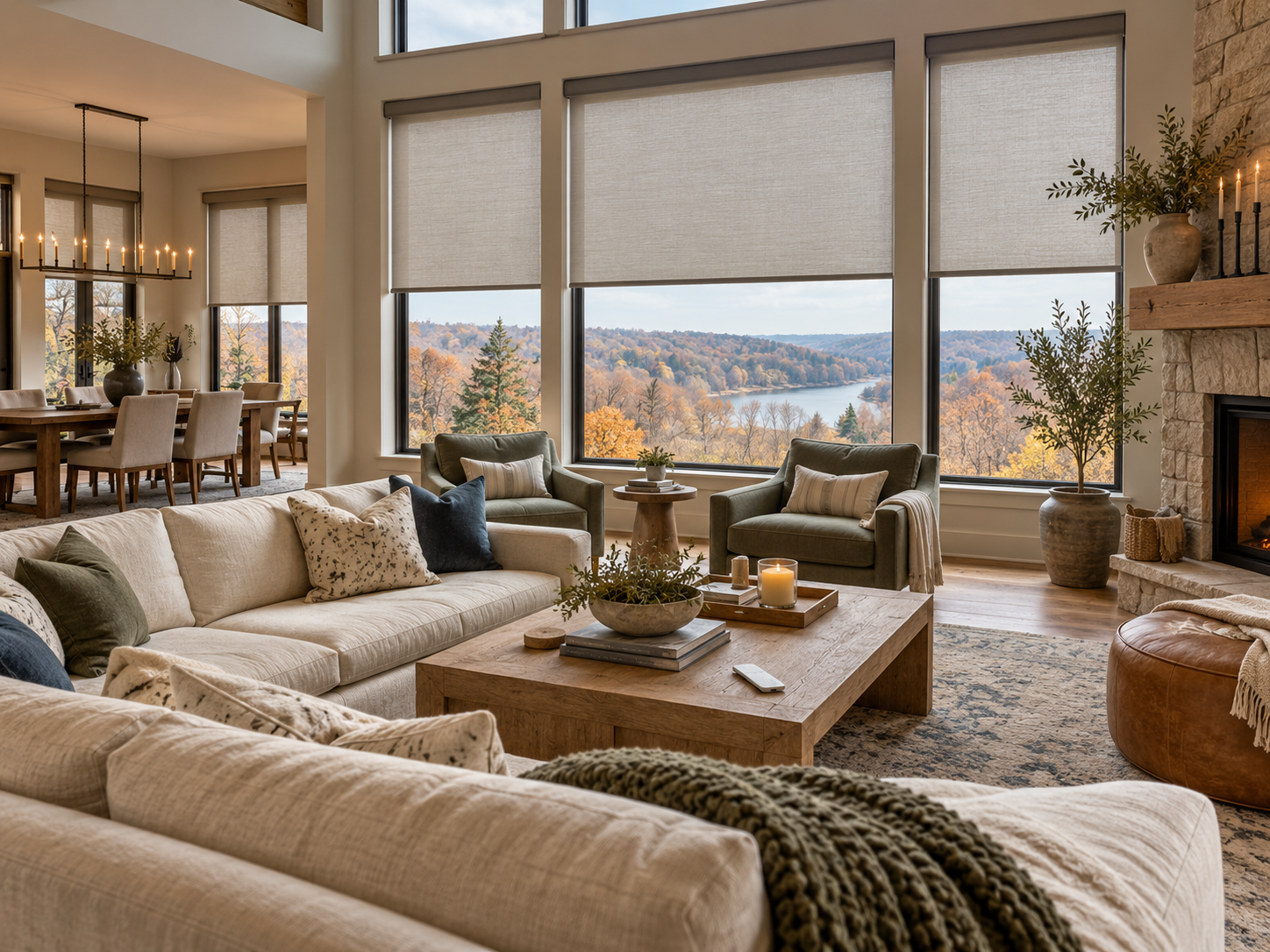
Help for Drafty Windows in Kentucky Homes
How Can Window Treatments Make Drafty Windows More Comfortable?
Drafty windows can make an otherwise comfortable room feel cold as temperatures drop across Western Kentucky. Homeowners often notice the problem first near large windows, older glass, sliding doors, or rooms that seem harder to keep warm.
Custom window treatments cannot repair gaps, failed seals, or damaged windows. However, the right shades, shutters, or drapery can add another layer between the glass and your living space. That added coverage can improve window insulation, comfort, privacy, and light control throughout fall and winter.
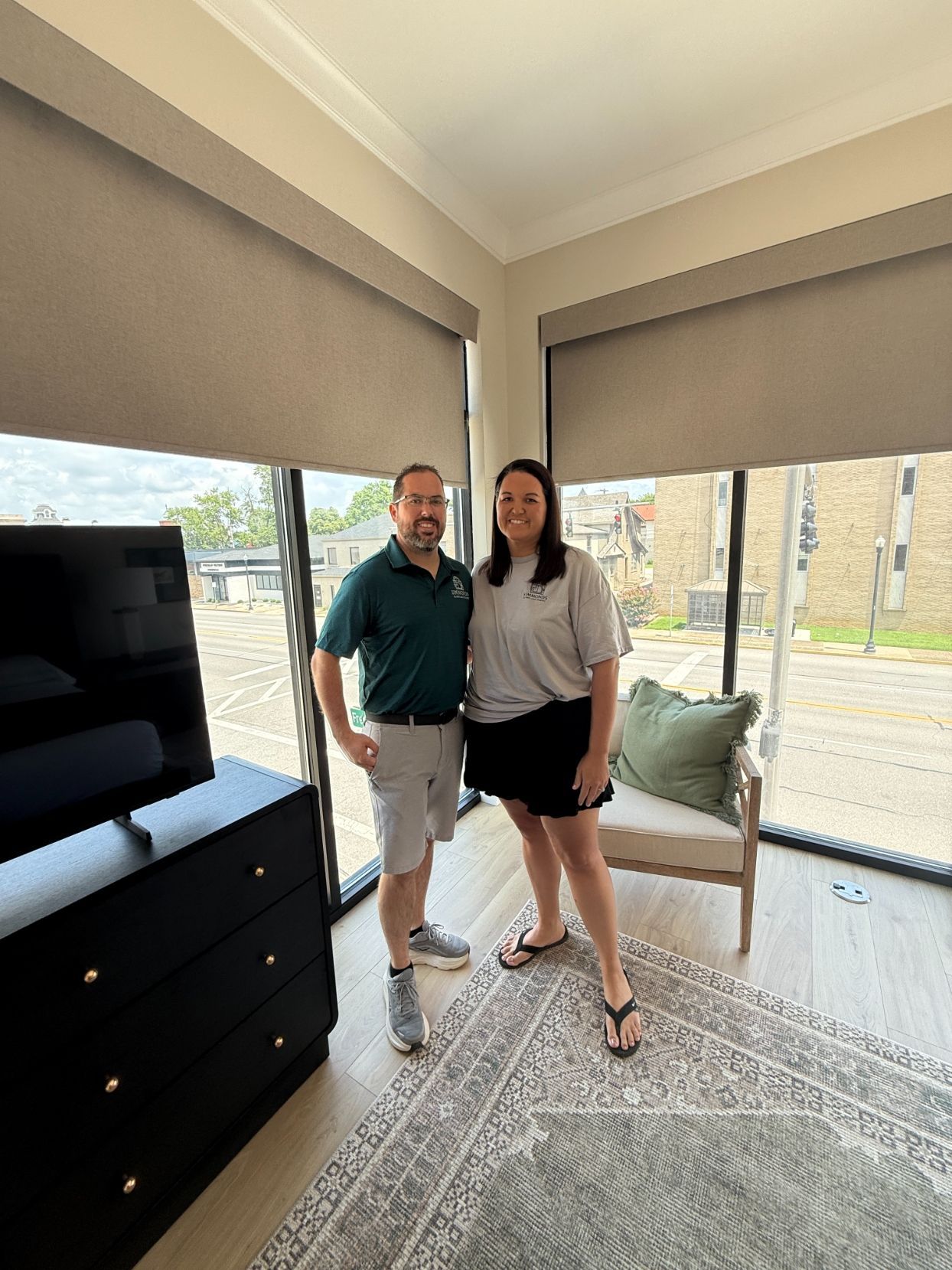
Simmonds Blinds and Drapes helps homeowners throughout Owensboro, Bowling Green, Beaver Dam, and surrounding Western Kentucky communities choose window treatments that make cold-weather rooms feel more comfortable.

How Can Window Treatments Make Drafty Windows More Comfortable?
Window treatments can make drafty windows feel more comfortable by adding coverage between cold glass and the room. Insulating shades, shutters, and layered treatments can reduce direct exposure to the window surface and help create a more comfortable indoor environment.
Some of the best options include:
- Cellular shades
- Roman shades
- Interior shutters
- Lined custom drapery
- Layered shades and drapes
- Motorized shades that are easy to close as temperatures fall
The best choice depends on whether the problem is cold glass, an actual air leak, or both.
That distinction is important. A well-fitted shade may improve comfort and reduce drafts, but it should never be presented as a replacement for weatherstripping, caulking, window repair, or other work needed to stop moving air.
What Causes Windows to Feel Drafty in Winter?
Windows can feel drafty because of actual air leaks or because the glass itself becomes colder than the surrounding walls. Both situations can make the area near a window noticeably less comfortable.
True drafts may come from:
- Gaps around the window frame
- Aging or damaged weatherstripping
- Failed seals
- Poorly fitted windows
- Openings around trim or hardware
In other cases, no air is moving through the window at all. Cold glass can still create an uncomfortable temperature difference near seating areas, beds, or workspaces.
Western Kentucky homes experience changing temperatures throughout late fall and winter. That makes window comfort especially noticeable in rooms with large expanses of glass.
If you can physically feel air moving through a closed window, the window itself should be inspected. Window treatments can help with comfort and create an insulating barrier, but they cannot correct the underlying leak.

Do Cellular Shades Help with Cold or
Drafty Windows?
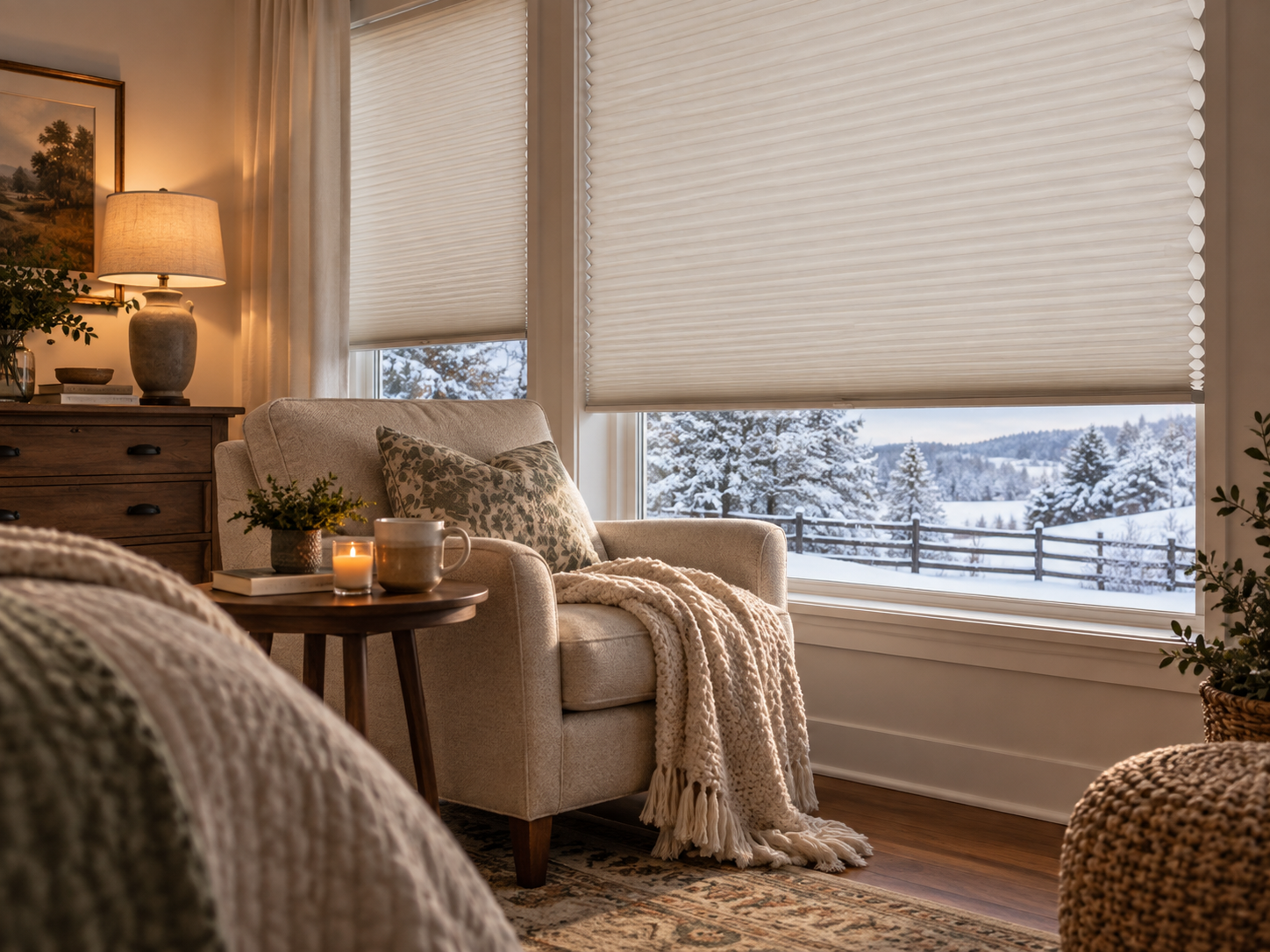
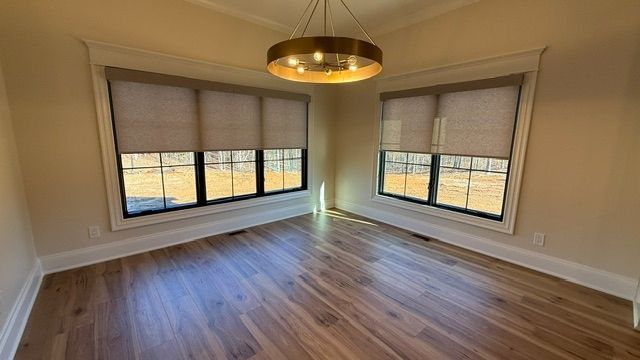
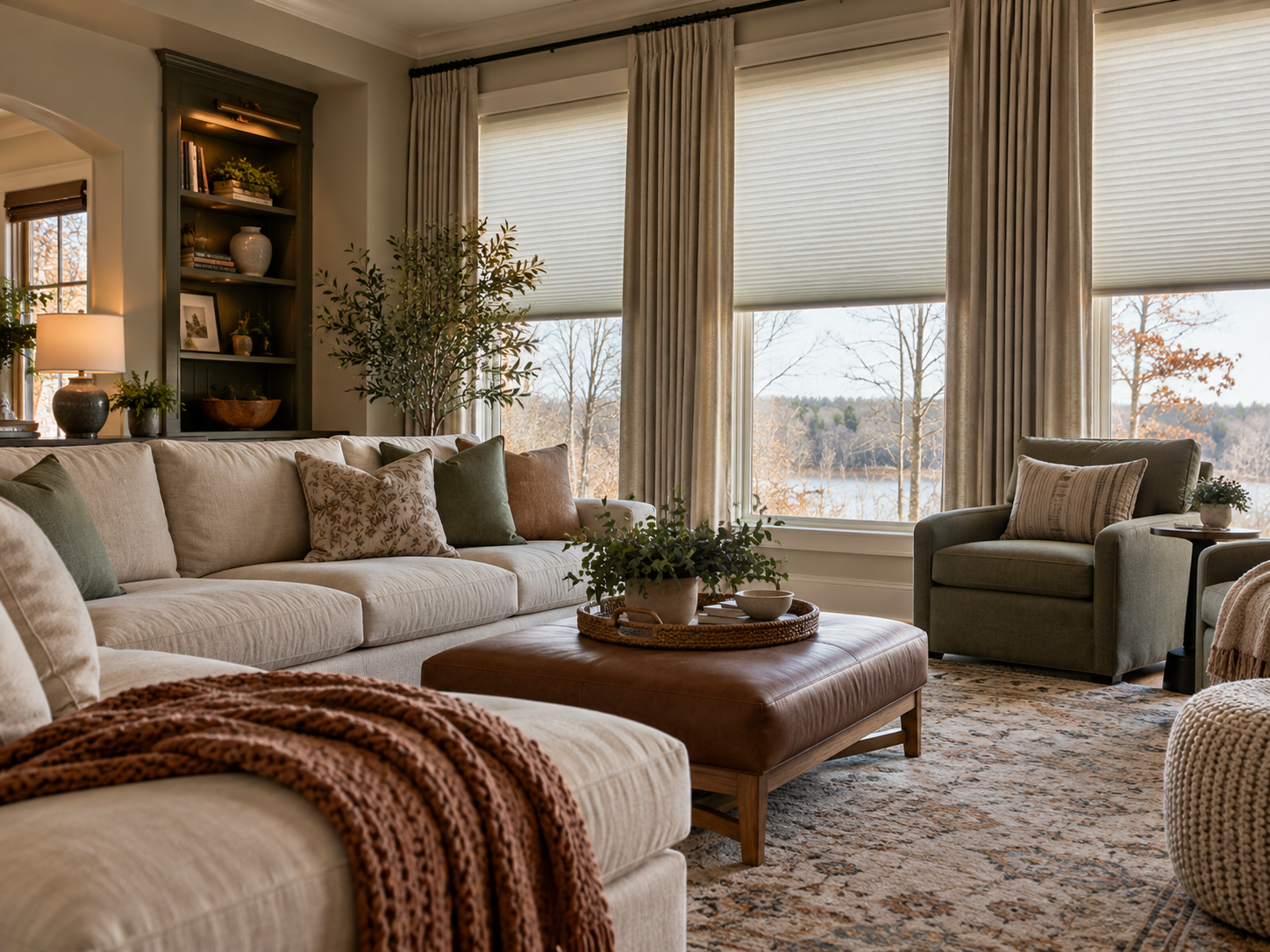
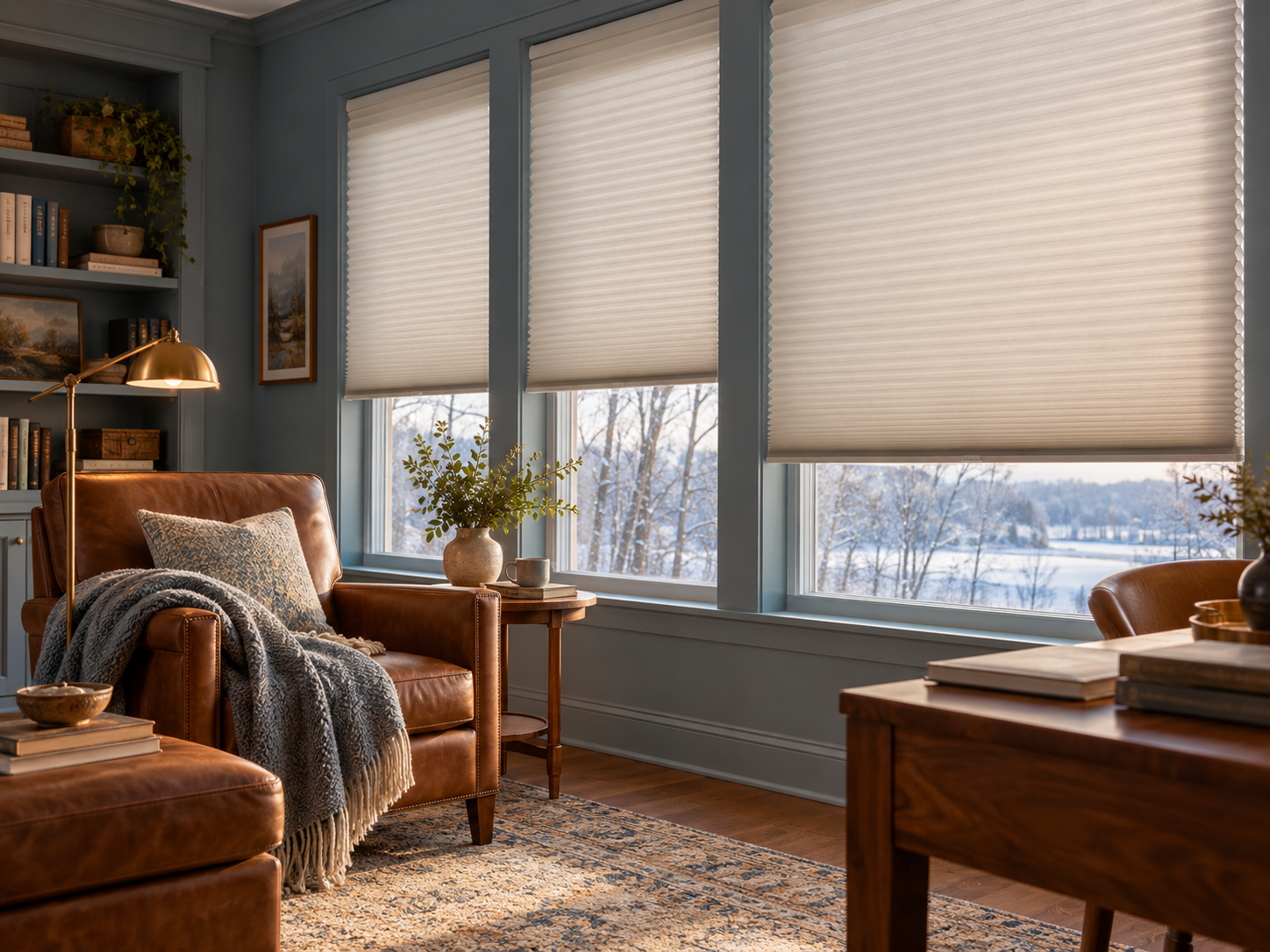
Yes. Cellular shades are one of the strongest window treatment choices for homeowners who want more insulation at the window.
Also called honeycomb shades, cellular shades contain pockets that trap air within the fabric structure. That creates an extra insulating layer between the window and the room.
Cellular shades can work especially well in:
- Bedrooms
- Family rooms
- Home offices
- Living rooms
- Rooms with large windows
- Spaces that feel colder near the glass
They are available in light-filtering and blackout options, so homeowners can balance winter comfort with privacy and natural light.
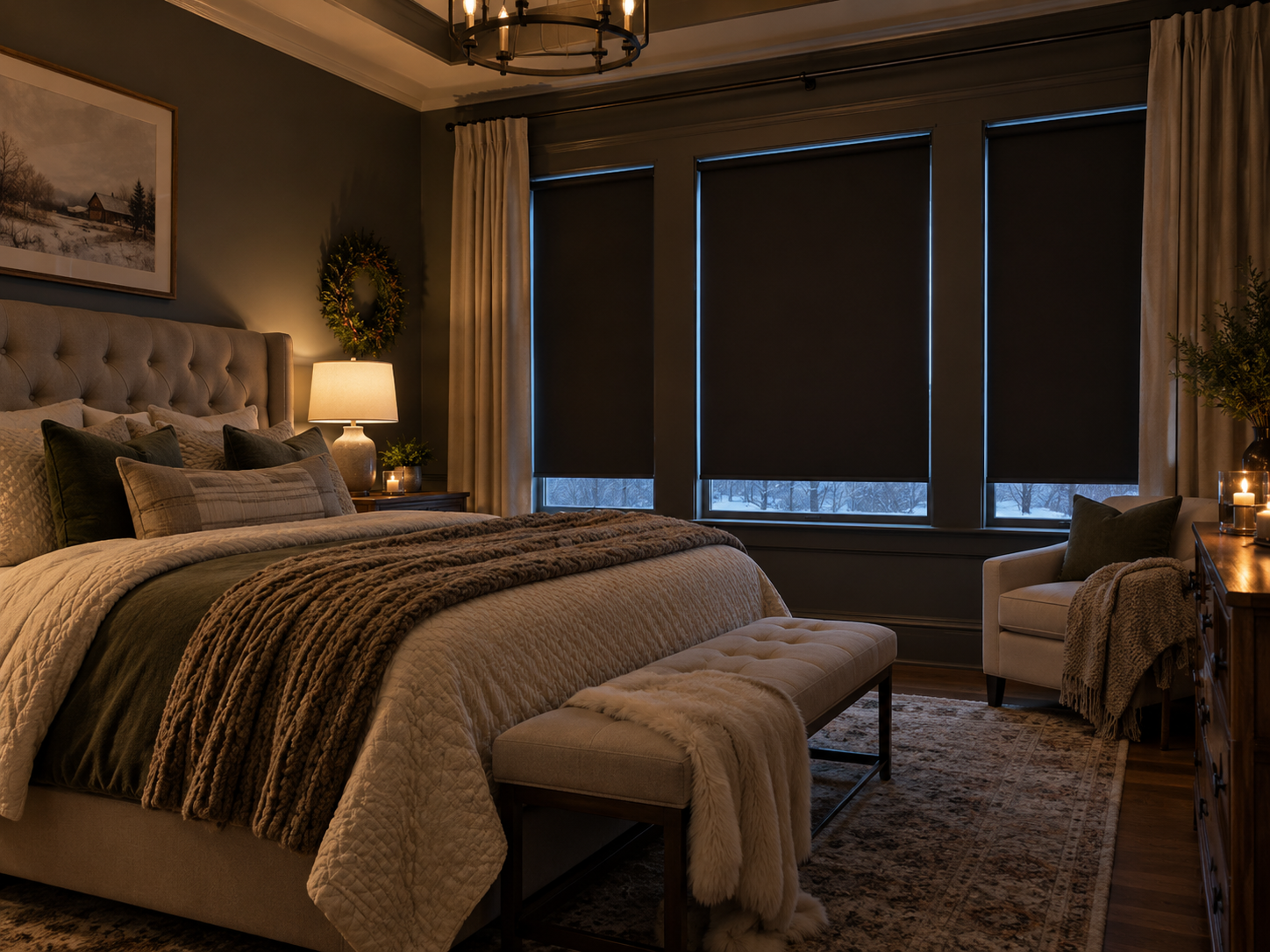
Blackout cellular shades are particularly useful in bedrooms. They combine the insulating structure of a cellular shade with stronger room-darkening performance.
Simmonds Blinds and Drapes can bring cellular shade samples directly to your home so you can compare fabrics, colors, opacity levels, and operating options in the room where they will actually be used.
Can Drapery, Roman Shades, and Shutters Help with Winter Comfort?
Yes. Drapery, Roman shades, and interior shutters can all add useful coverage at the window while creating very different looks.
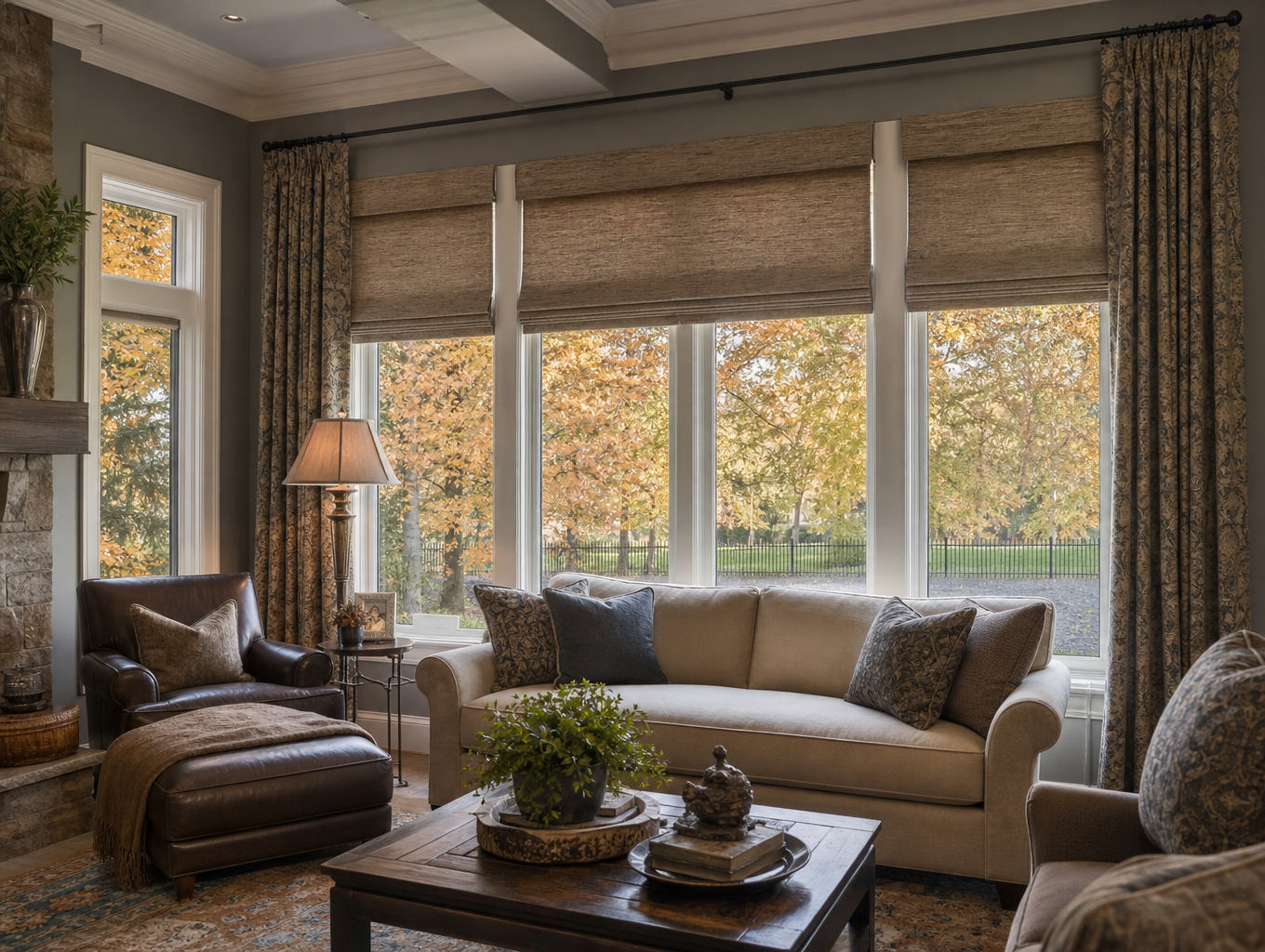
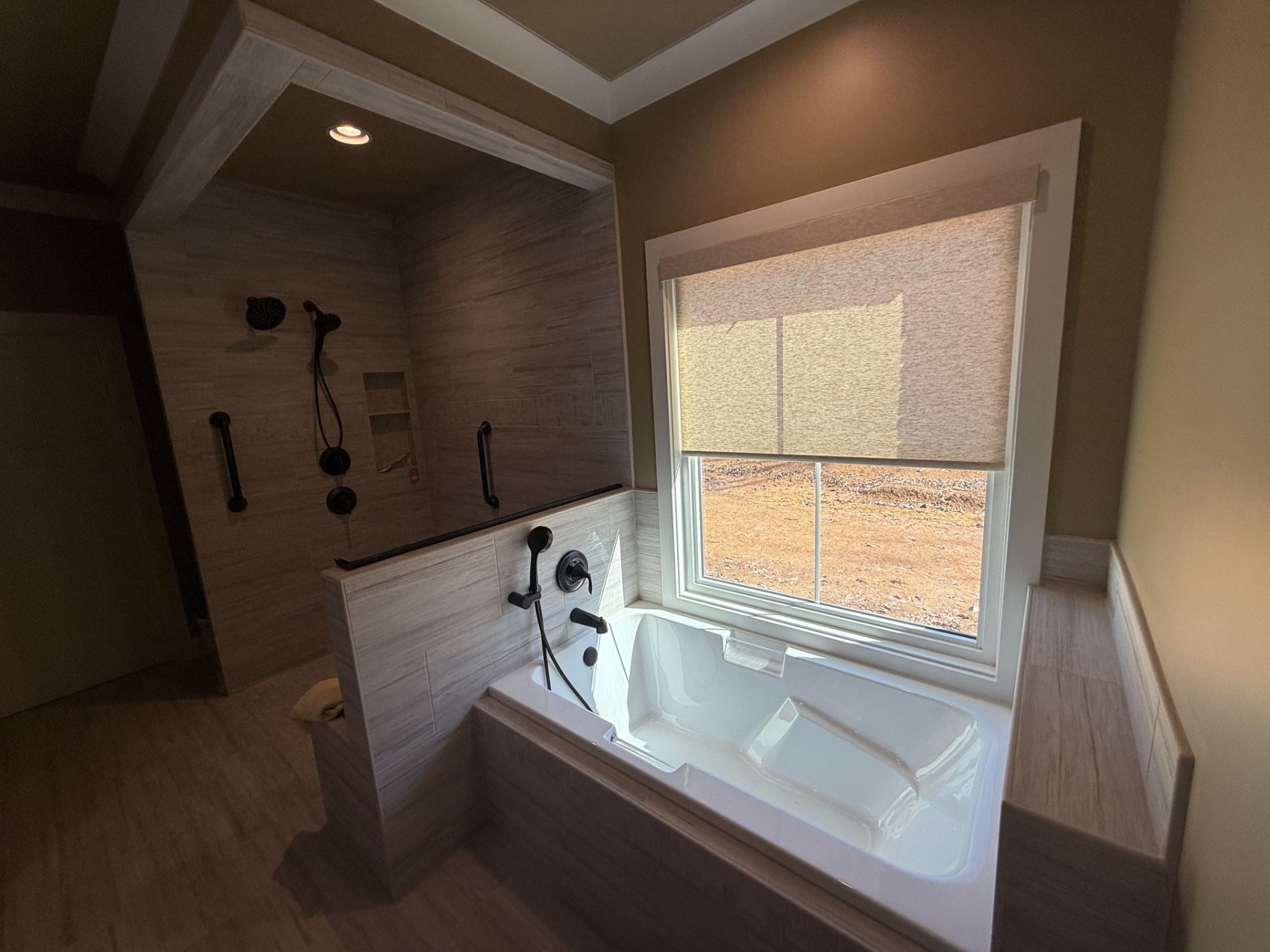
Roman shades use soft fabric to cover the glass. Depending on the fabric and lining, they can add visual warmth and another layer between the room and the window.
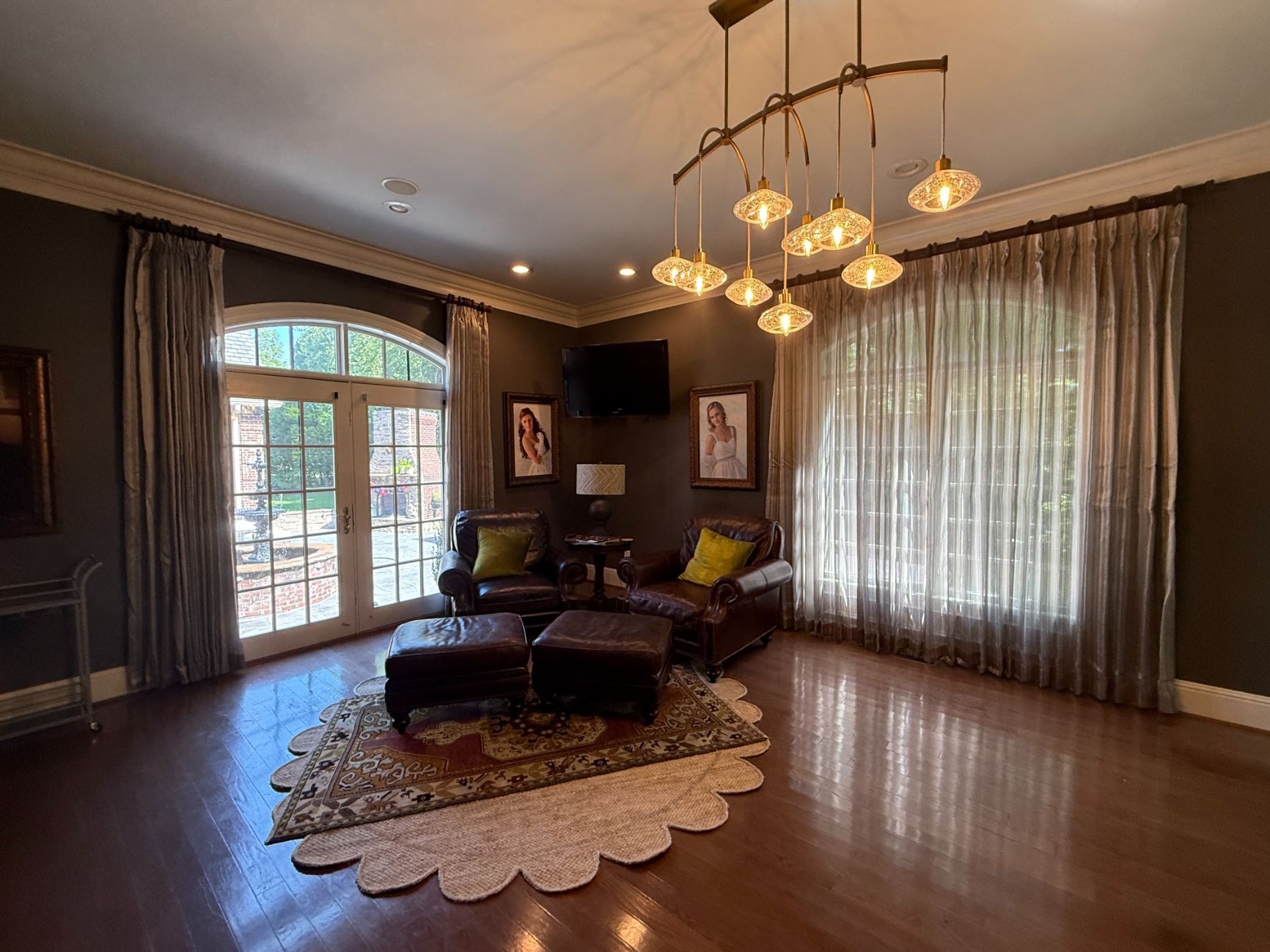
Custom drapery can provide even greater coverage around a window opening. Full-length drapes work especially well in bedrooms, dining rooms, living rooms, and other spaces where homeowners want both comfort and a finished design.
Interior shutters offer a more structured solution. When closed, the panels and louvers cover the window while also providing privacy and adjustable light control.
Layering can provide even more flexibility. Popular combinations include:
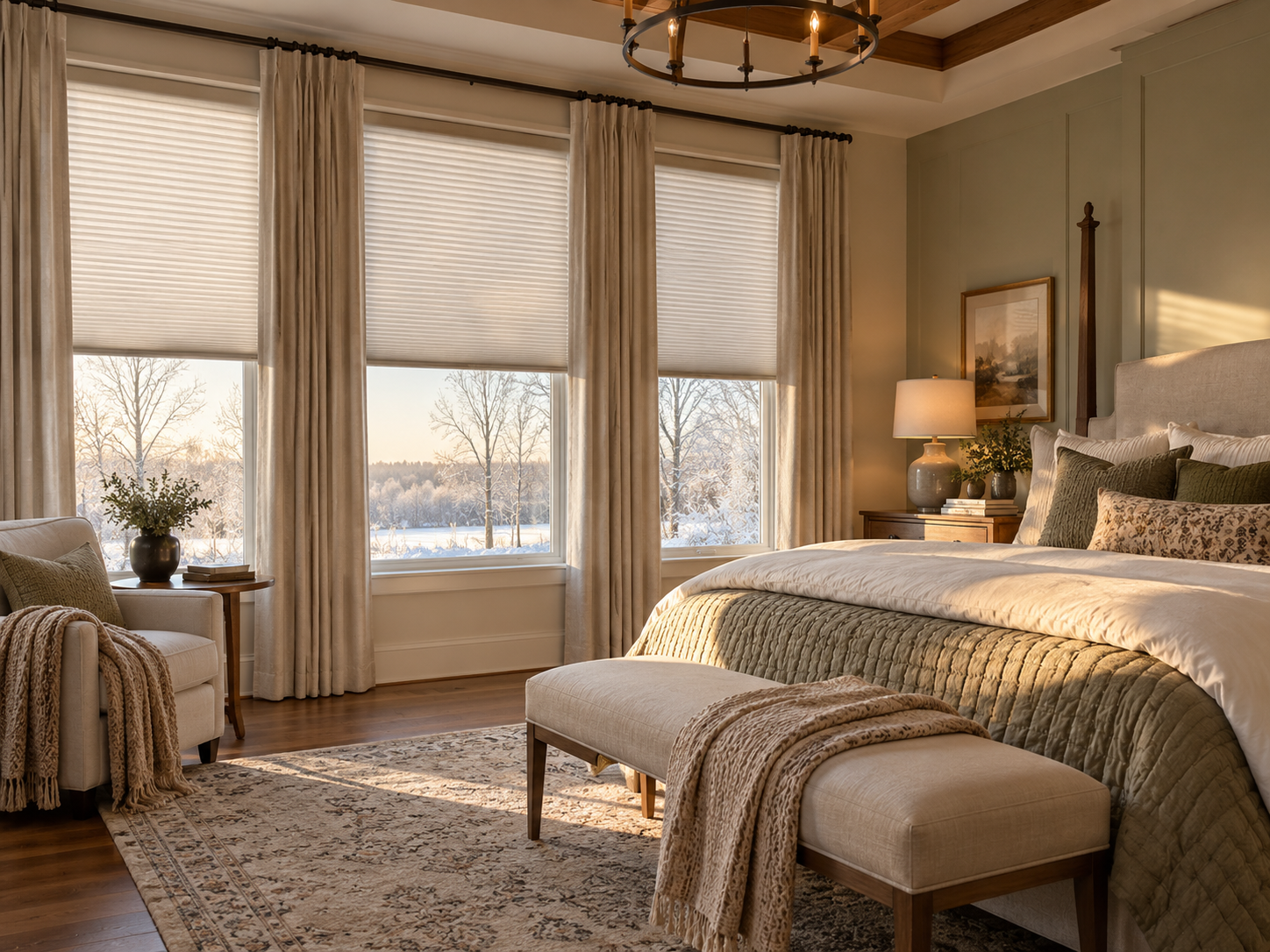
- Cellular shades with drapery
- Roller shades with full drapes
- Roman shades with decorative side panels
- Shutters with fabric panels
These combinations allow homeowners to adjust light during the day while adding coverage when outdoor temperatures drop.

Can Motorized Shades Help During Cold Weather?
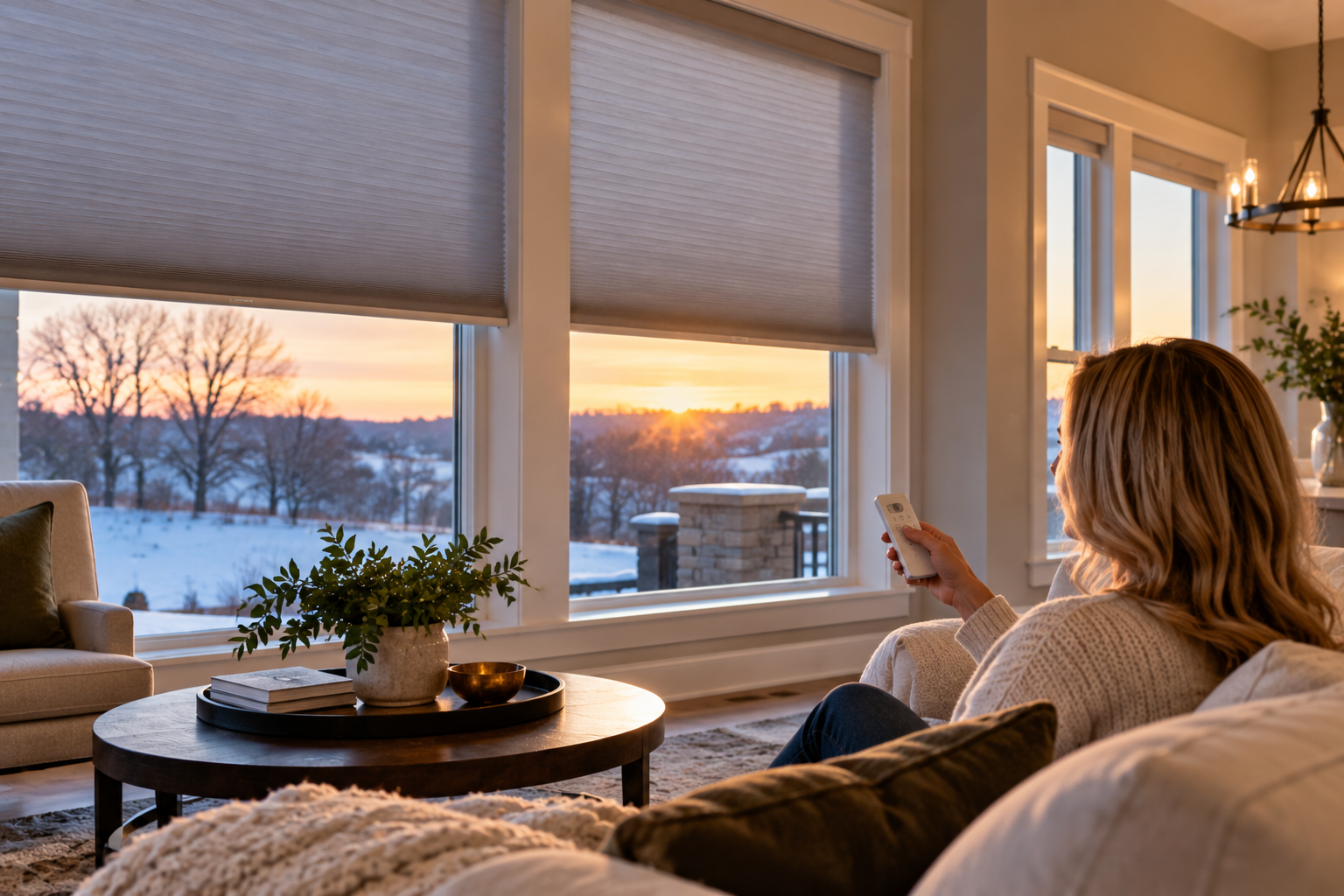
Yes. Motorized shades can make cold-weather window management easier because homeowners can adjust shades without walking from window to window.
During a sunny winter afternoon, opening shades may allow useful natural light into the room. As evening temperatures fall, homeowners can lower the shades for greater privacy and additional coverage at the glass.
Motorization can be especially helpful for:
- Tall windows
- Two-story rooms
- Large groups of windows
- Windows behind furniture
- Hard-to-reach openings
- Busy households
Depending on the system, shades may operate with a remote, wall control, app, or compatible home automation setup.
Convenience matters because window treatments only provide their benefits when homeowners actually use them. Motorization makes regular seasonal adjustments much easier.

When Should a Drafty Window Be Repaired Instead of Covered?
A drafty window should be repaired when air is physically entering through gaps, damaged seals, or the window frame itself. Window treatments should complement proper window maintenance, not replace it.
Signs that the window may need attention include:
- Air moving around a closed window
- Visible gaps
- Damaged weatherstripping
- Moisture between panes
- Cracked glass
- Difficulty closing or locking the window
- Higher energy bills and lower energy efficiency
Once structural issues are addressed, custom window treatments can help improve privacy, light control, insulation, and everyday comfort.
This is also why an in-home consultation is valuable. Sean Simmonds and the Simmonds Blinds and Drapes team can evaluate how the room is used, where the windows are located, and what type of covering makes sense for the space.
The goal is not to sell the same product for every window. It is to help homeowners choose the right solution for each room.
Make Cold-Weather Rooms More Comfortable
Drafty or cold-feeling windows can become much more noticeable as Western Kentucky moves into late fall and winter. The right custom window treatments can help create a more comfortable environment while also improving privacy, light control, and the overall look of the room.
Cellular shades, Roman shades, shutters, custom drapery, layered treatments, and motorized shades all offer different advantages. The best solution depends on your windows, your home, and how you use each space.
Simmonds Blinds and Drapes is a family-owned window treatment company serving Owensboro, Bowling Green, Beaver Dam, and surrounding Western Kentucky communities. With a mobile showroom, professional measuring, and expert installation, the team brings window treatment options directly into your home.
Schedule an in-home consultation with Simmonds Blinds and Drapes to explore custom window treatments that can help make cold-weather rooms more comfortable.
Frequently Asked Questions
Q: Can window treatments stop drafts?
A: No. Window treatments cannot repair air leaks caused by gaps, damaged seals, or failed weatherstripping. They can add coverage between the room and the window, which may help the space feel more comfortable after structural issues are addressed.
Q: What are the best shades for drafty windows?
A: Cellular shades are one of the strongest options because their honeycomb-shaped cells trap air and add insulation at the window. Roman shades, shutters, and layered treatments can also provide useful coverage.
Q: Do cellular shades really help keep rooms warmer?
A: Cellular shades can help reduce heat transfer through windows by trapping air within their cells. They are especially useful in rooms where homeowners notice cold glass or temperature differences near the windows.
Q: Does adding drapery over shades help in winter?
A: Yes. Layering drapery over a shade adds another layer at the window while also improving privacy and design. This approach works especially well in bedrooms, living rooms, and rooms with large windows.
Q: Are motorized shades useful for winter?
A: Yes. Motorized shades make it easier to adjust window coverings as sunlight and temperatures change throughout the day. They are especially helpful for large, tall, or hard-to-reach windows.