
Energy-Efficient Window Treatments in Kentucky
Which Window Treatments Help Kentucky Homes Stay Warmer in Winter?
Cold weather can make the areas around your windows feel noticeably less comfortable. Even well-built homes can lose heat through glass, while older or drafty windows may make the difference even more obvious.
The right window treatments can add another layer between your living space and the glass. They can also improve privacy, manage winter sunlight, and make rooms feel warmer and more comfortable.
For homeowners in Owensboro, Bowling Green, Beaver Dam, and surrounding Western Kentucky communities, fall is an ideal time to evaluate how well current blinds, shades, shutters, or drapery are performing.
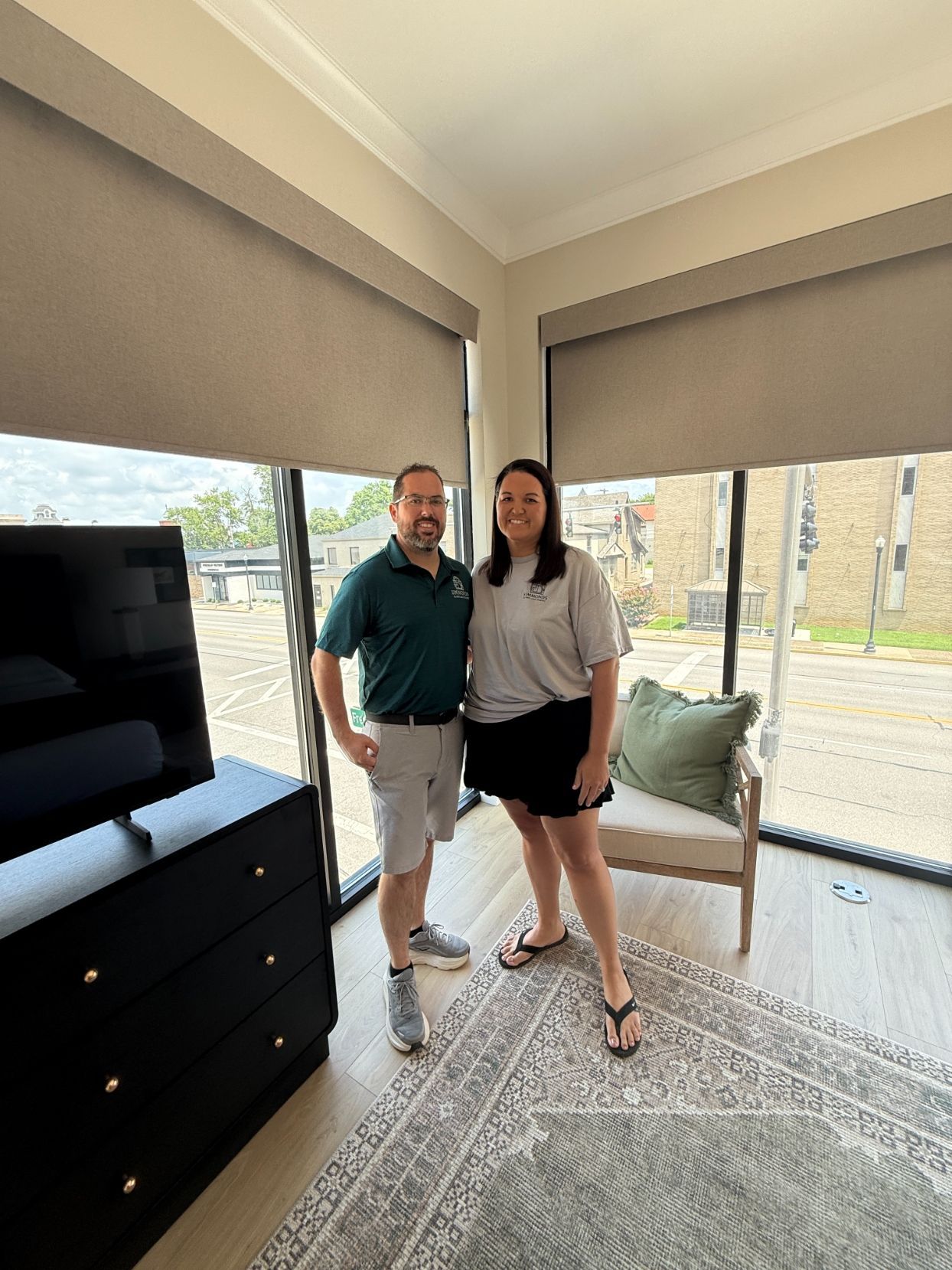
Simmonds Blinds and Drapes helps homeowners compare energy-efficient window treatments in their own homes through personalized in-home consultations and a convenient mobile showroom.

Which Window Treatments Help Kentucky Homes Stay Warmer in Winter?
Cellular shades, Roman shades, lined drapery, shutters, and layered window treatments can all help improve comfort around windows during colder weather.
Some of the best options include:
- Cellular shades with insulating air pockets
- Roman shades with substantial fabric or lining
- Custom drapery that adds another layer over the window
- Interior shutters that fit closely around the window opening
- Layered window treatments that combine shades with drapery
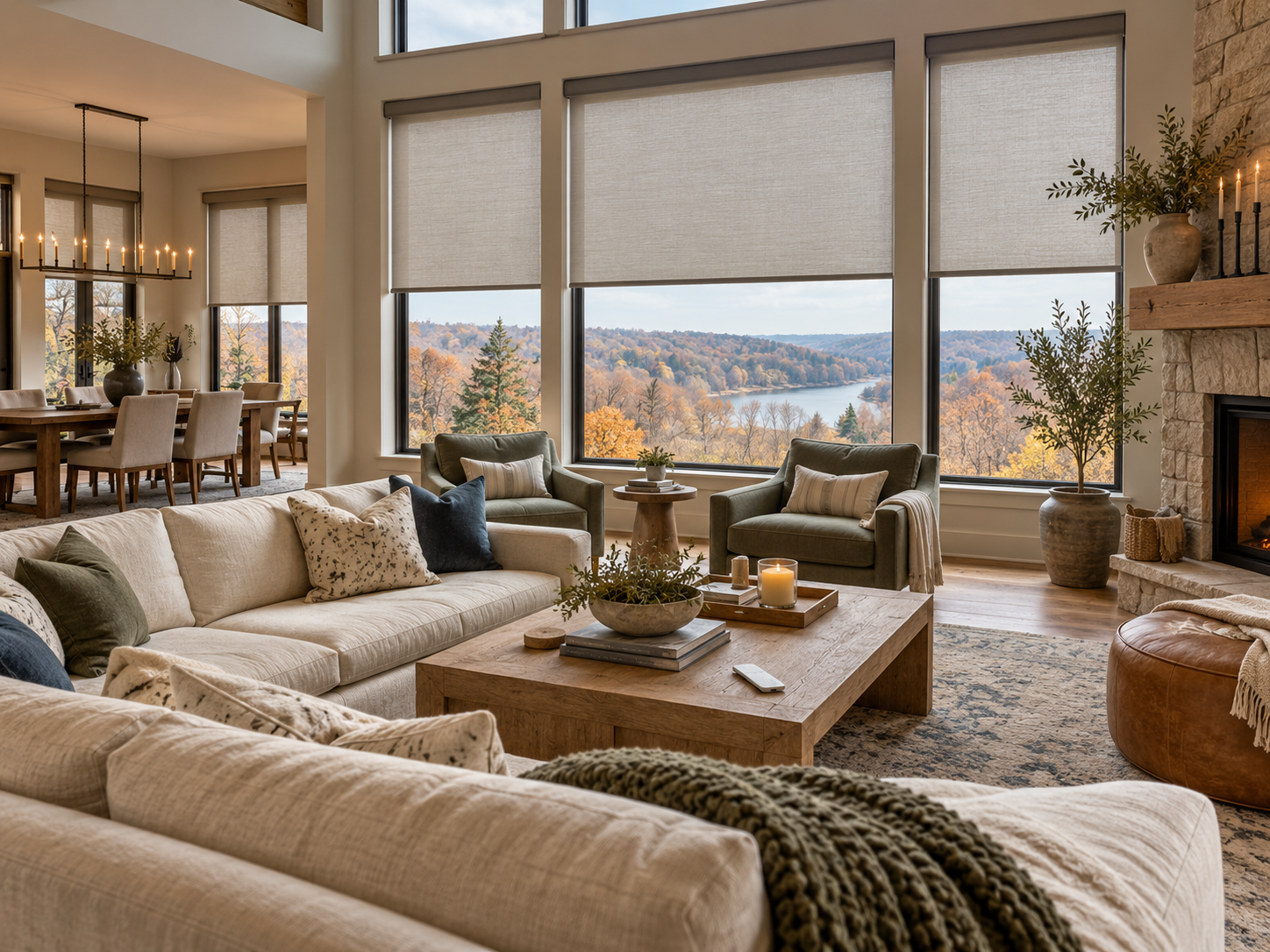
- Motorized shades that make daily light and temperature management easier
No window treatment can repair a leaking or poorly sealed window. However, the right product can help reduce heat transfer and make the space near the window feel more comfortable.
Do Cellular Shades Help Insulate Windows?
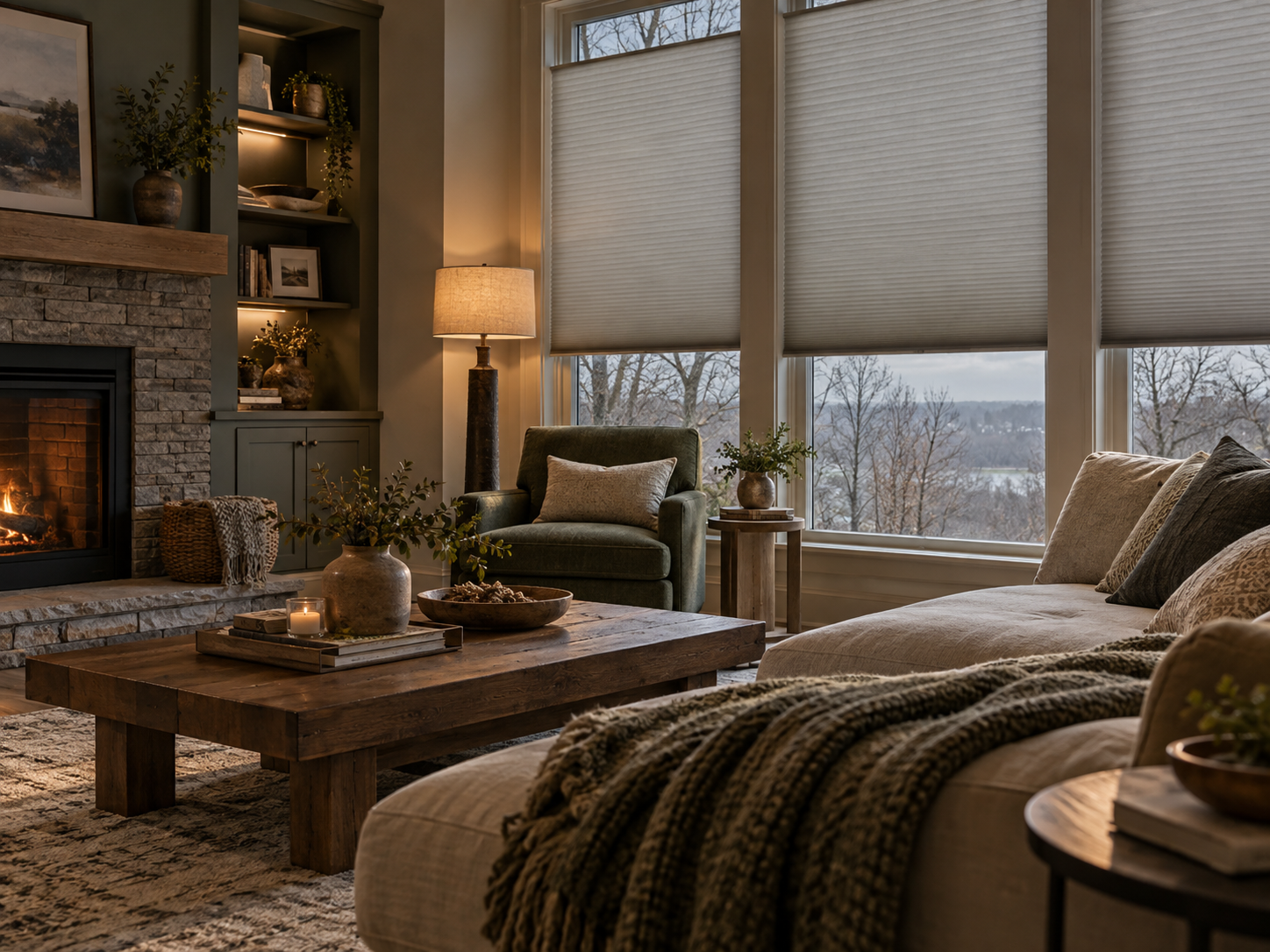
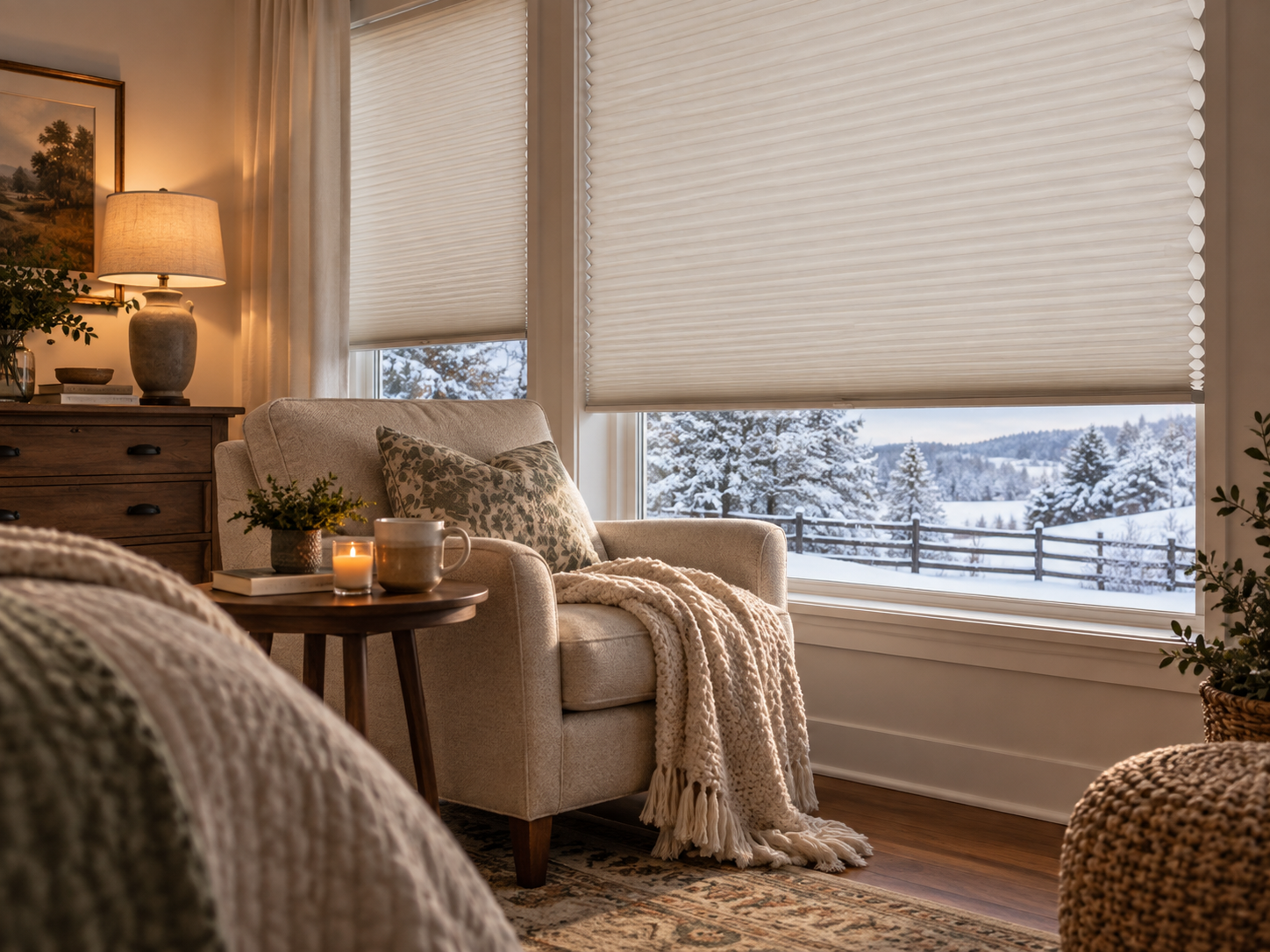
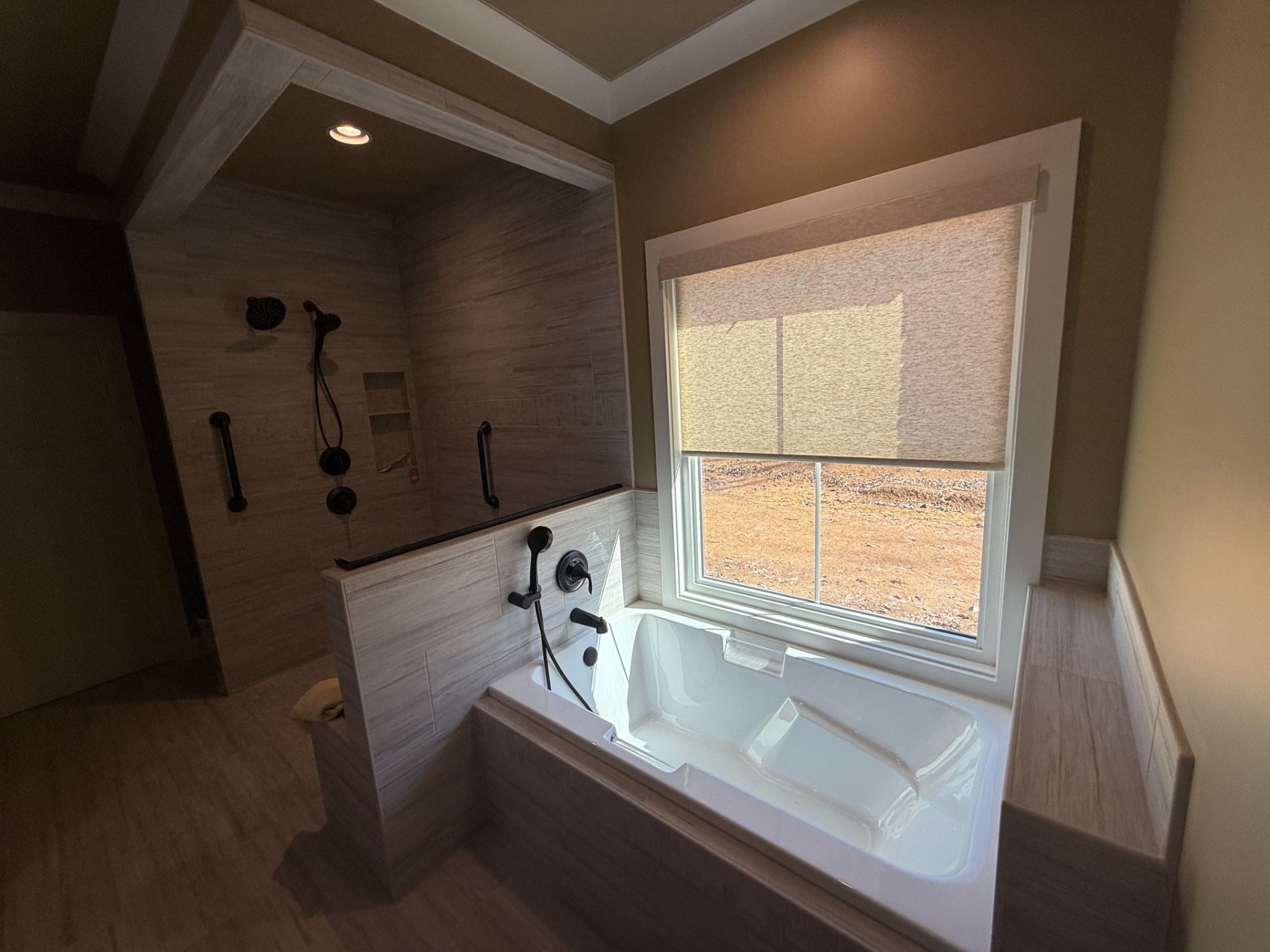
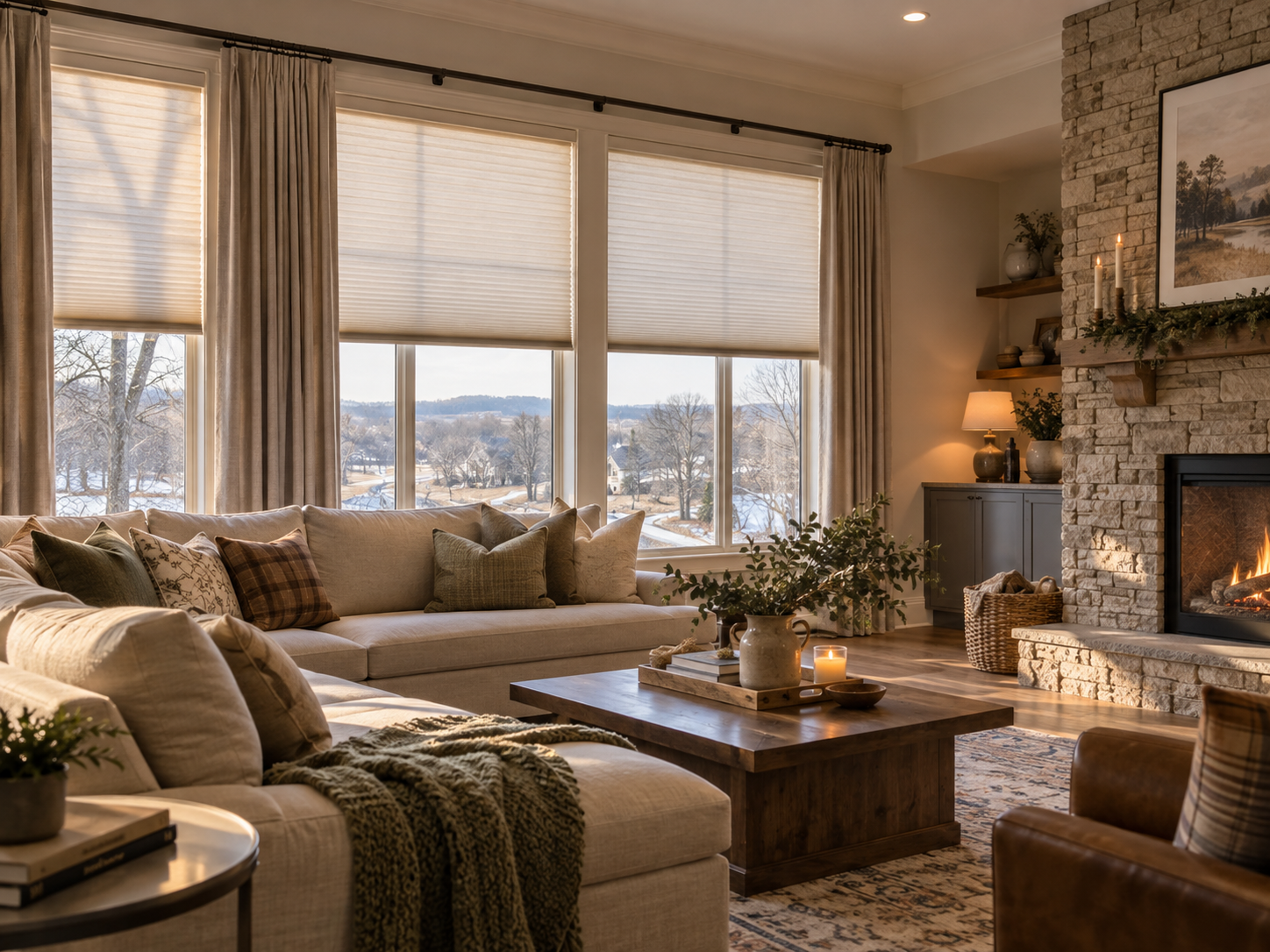
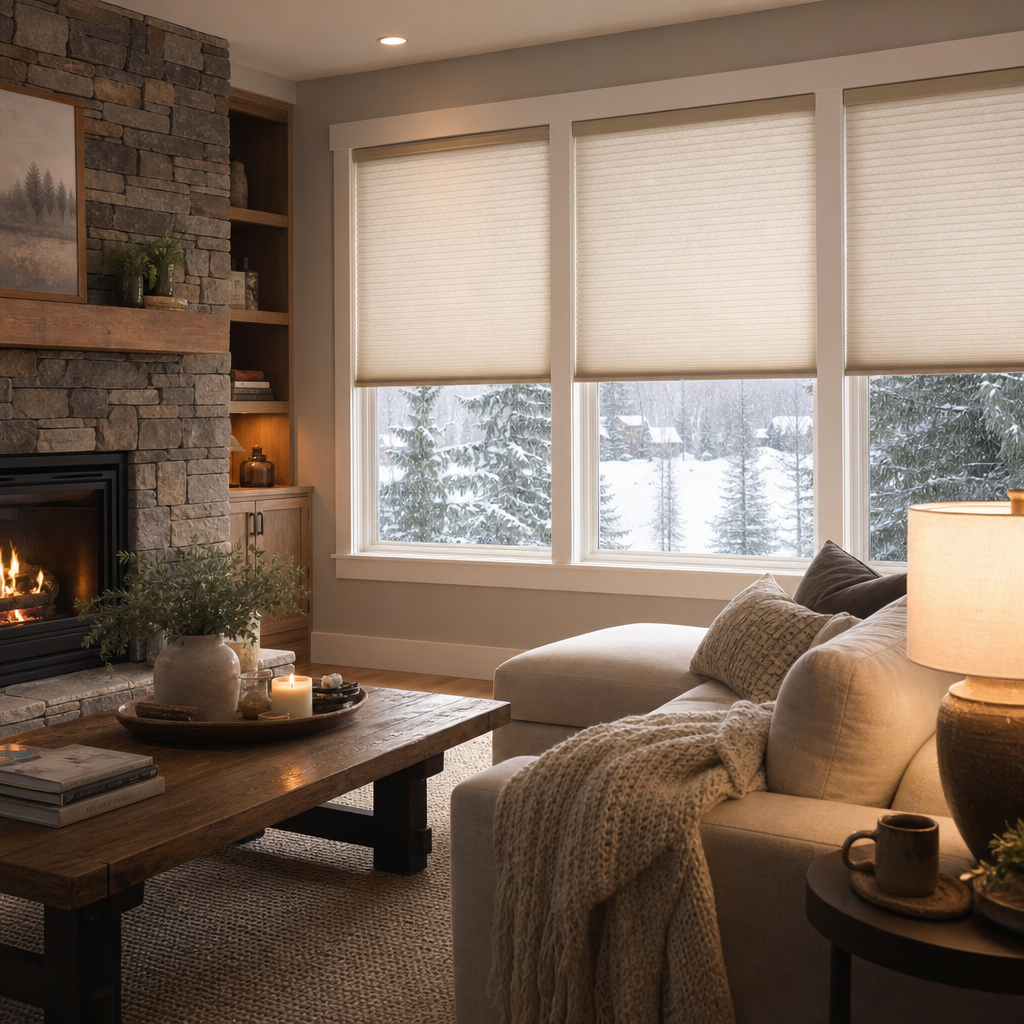
Yes, cellular shades are one of the most effective window treatments for adding insulation at the glass. Their honeycomb-shaped cells trap pockets of air between the room and the window.
That design is why cellular shades are often called insulated shades or honeycomb shades. They can be especially useful in bedrooms, living rooms, and spaces where homeowners notice a temperature difference near the windows.
Cellular shades also offer several other benefits:
- Light-filtering and room-darkening options
- Clean, simple styling
- Privacy
- Cordless options
- Motorization on many systems
For Western Kentucky homes with large windows or rooms that feel cooler in winter, cellular shades are often worth considering.

Can Drapery, Roman Shades, and Shutters Improve Winter Comfort?
Yes, drapery, Roman shades, and interior shutters can all add another layer between the room and the window. Each option does it differently while also contributing to the design of the space.
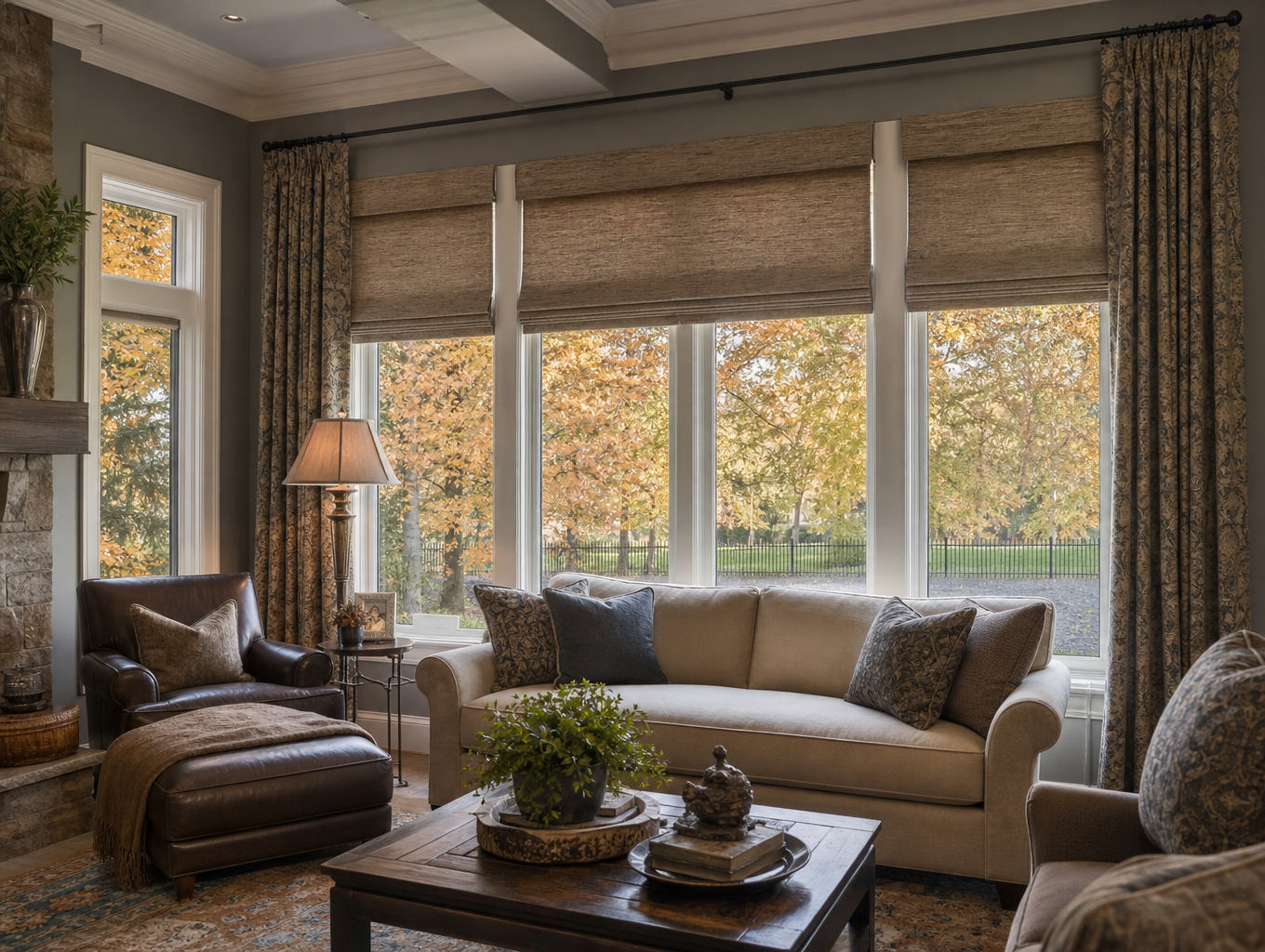
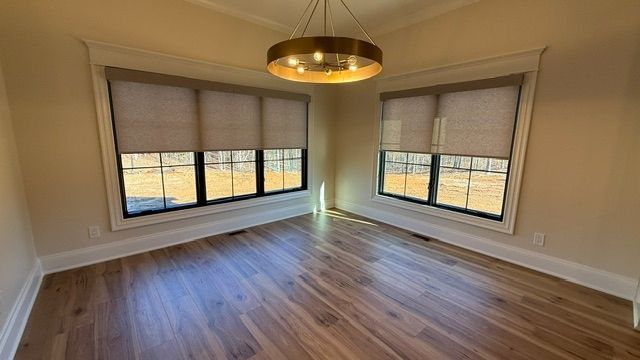
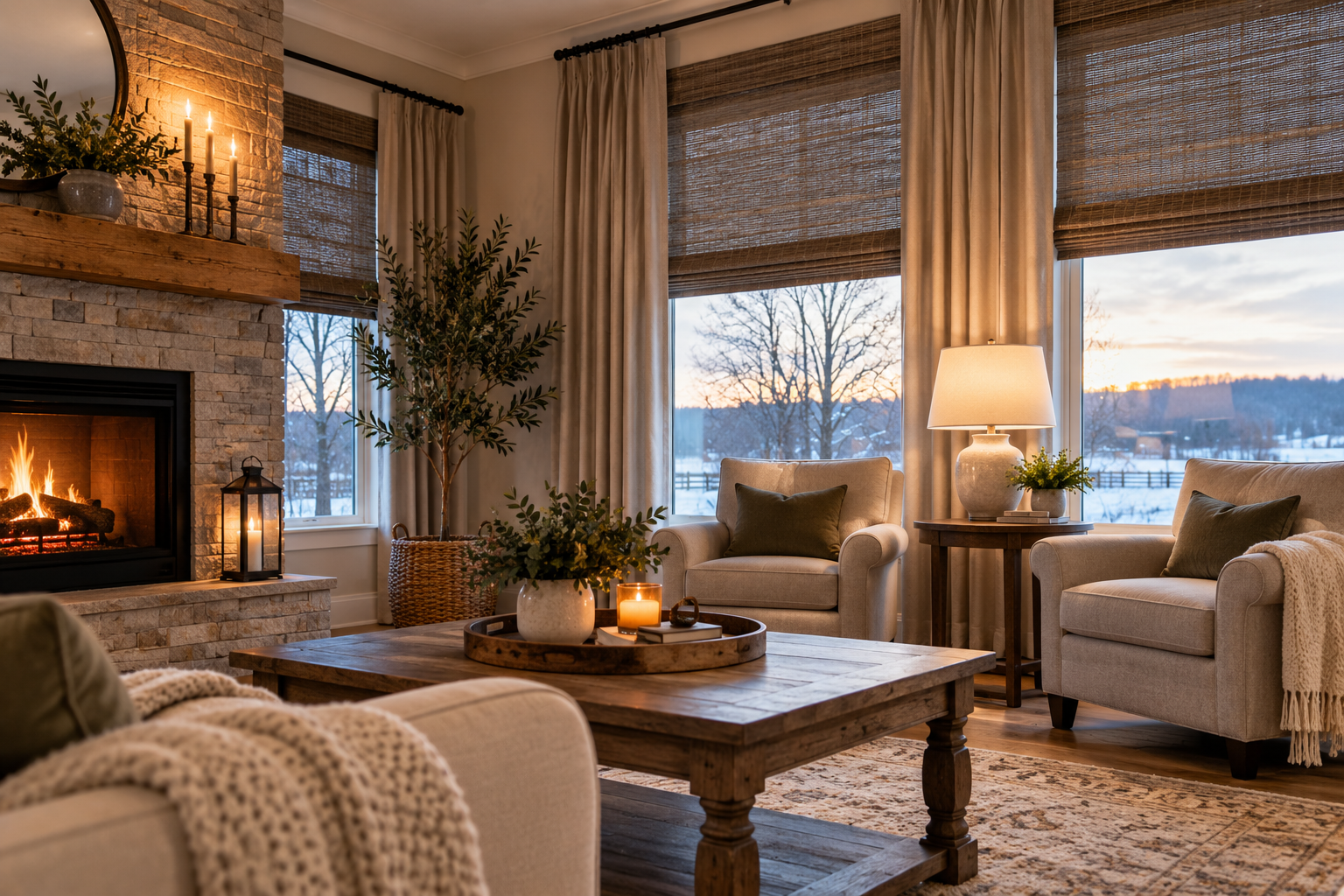
Roman shades use soft fabric to cover the window and can be selected with different levels of lining and opacity. They work especially well when homeowners want insulation without giving up a warm, decorative look.
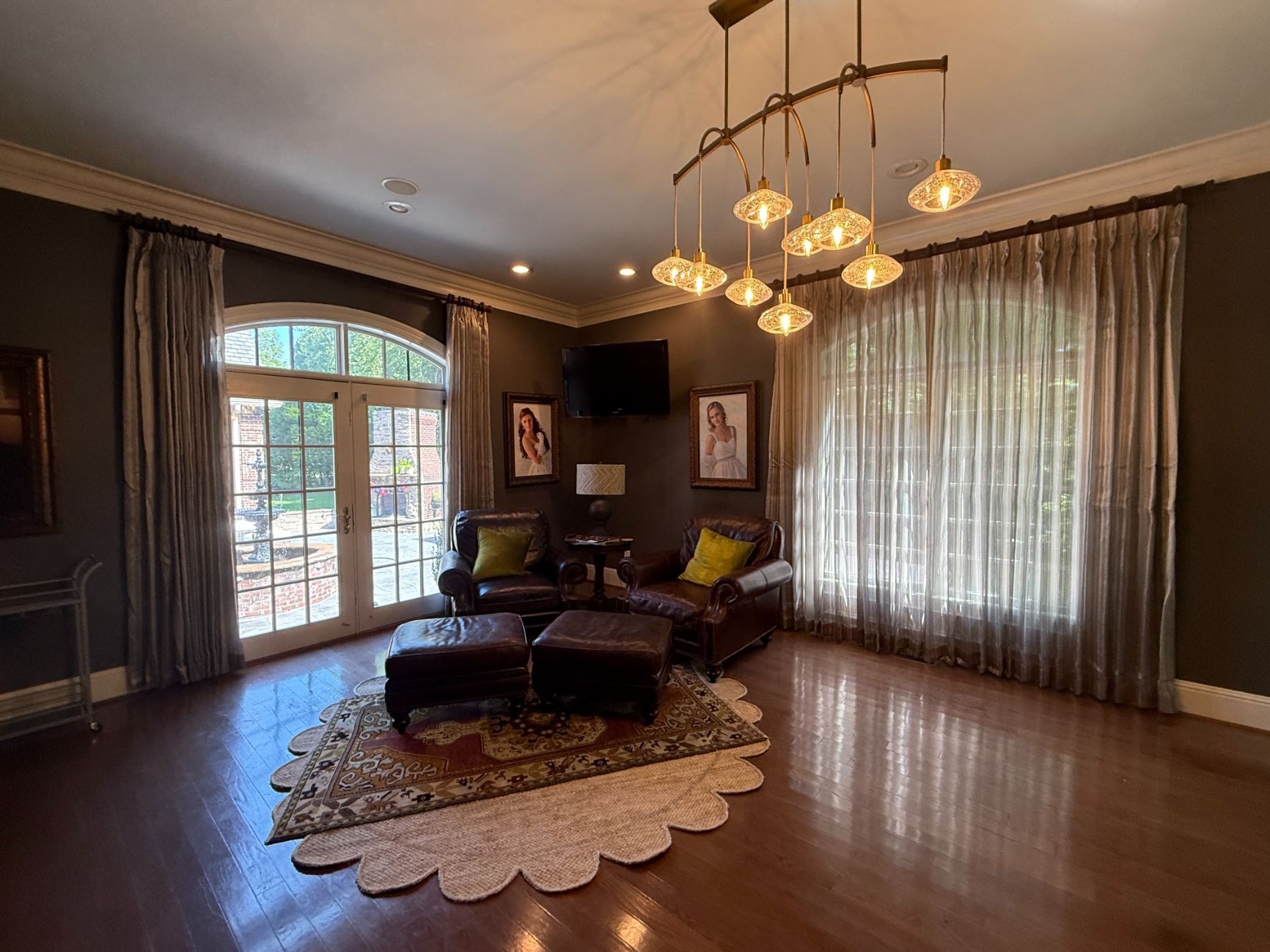
Custom drapery can extend beyond the window itself, creating additional coverage around the opening. Full drapes are especially useful in bedrooms, living rooms, dining rooms, and larger spaces where fabric can also add softness and visual warmth.
Interior shutters provide a more structured option. When closed, the panels and louvers create a solid layer across the window while offering excellent privacy and adjustable light control.
Not sure which option fits your home? Simmonds Blinds and Drapes brings samples directly to your home so you can compare materials, colors, fabrics, and operating styles in the actual room where they will be used.
Do Layered Window Treatments Help with Cold Windows?
Yes, layering window treatments can add both comfort and flexibility because two different products work together at the same window.
A functional shade can handle everyday privacy and light control. Drapery or side panels can then add another layer of fabric while giving the room a more finished appearance.
Popular combinations include:
- Cellular shades with custom drapery
- Roller shades with side panels
- Roman shades with decorative panels
- Interior shutters with drapery
- Woven shades with full drapes
Layering is particularly useful in primary bedrooms, family rooms, dining rooms, and spaces with large windows.
It also gives homeowners more control throughout the day. You can open treatments to enjoy warming winter sunlight, then close them later when temperatures drop and privacy becomes more important.

Can Motorized Shades Help with Energy Efficiency?
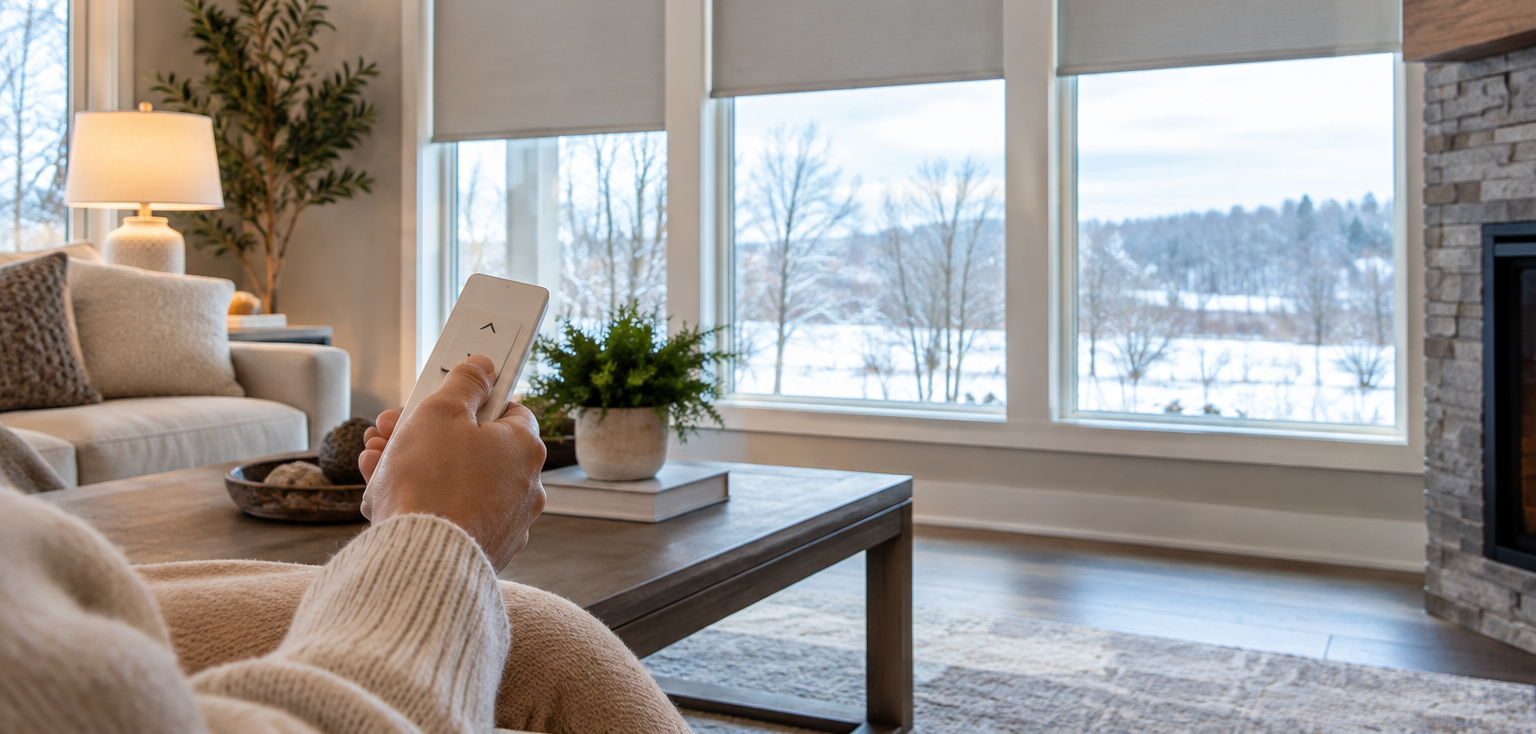
Yes, motorized shades can support better energy management because they make it easier to adjust window coverings at the right times each day.
During a sunny winter afternoon, opening the shades may allow useful natural light and warmth into the room. Later, the shades can close to add coverage at the window as outdoor temperatures fall.
Motorized shades can be especially helpful for:
- Tall windows
- Large groups of windows
- Two-story living rooms
- Hard-to-reach windows
- Busy households
- Homeowners who prefer scheduled operation
Depending on the system, shades may be controlled with a remote, app, wall control, or compatible home automation system.
The greatest advantage is consistency. A window treatment can only help when it is being used, and motorization makes regular adjustments much easier.
How Do You Choose the Most Energy-Efficient Window Treatment for Your Home?
The best energy-efficient window treatment depends on the window, the room, the amount of sunlight it receives, and how you use the space.
Before selecting a product, consider:
- Which rooms feel cold near the windows?
- Are the windows large or difficult to reach?
- Do you need daytime privacy?
- Do you want room-darkening capabilities?
- Does the room receive useful winter sunlight?
- Do you prefer fabric, shutters, or a cleaner shade design?
- Would motorization make daily adjustments easier?
This is where an in-home consultation can make a major difference.
Instead of choosing a product from a small image or showroom display, you can evaluate samples against your flooring, paint, furniture, and natural light. Sean Simmonds and the Simmonds Blinds and Drapes team can also help identify which window treatment makes the most sense for each room.
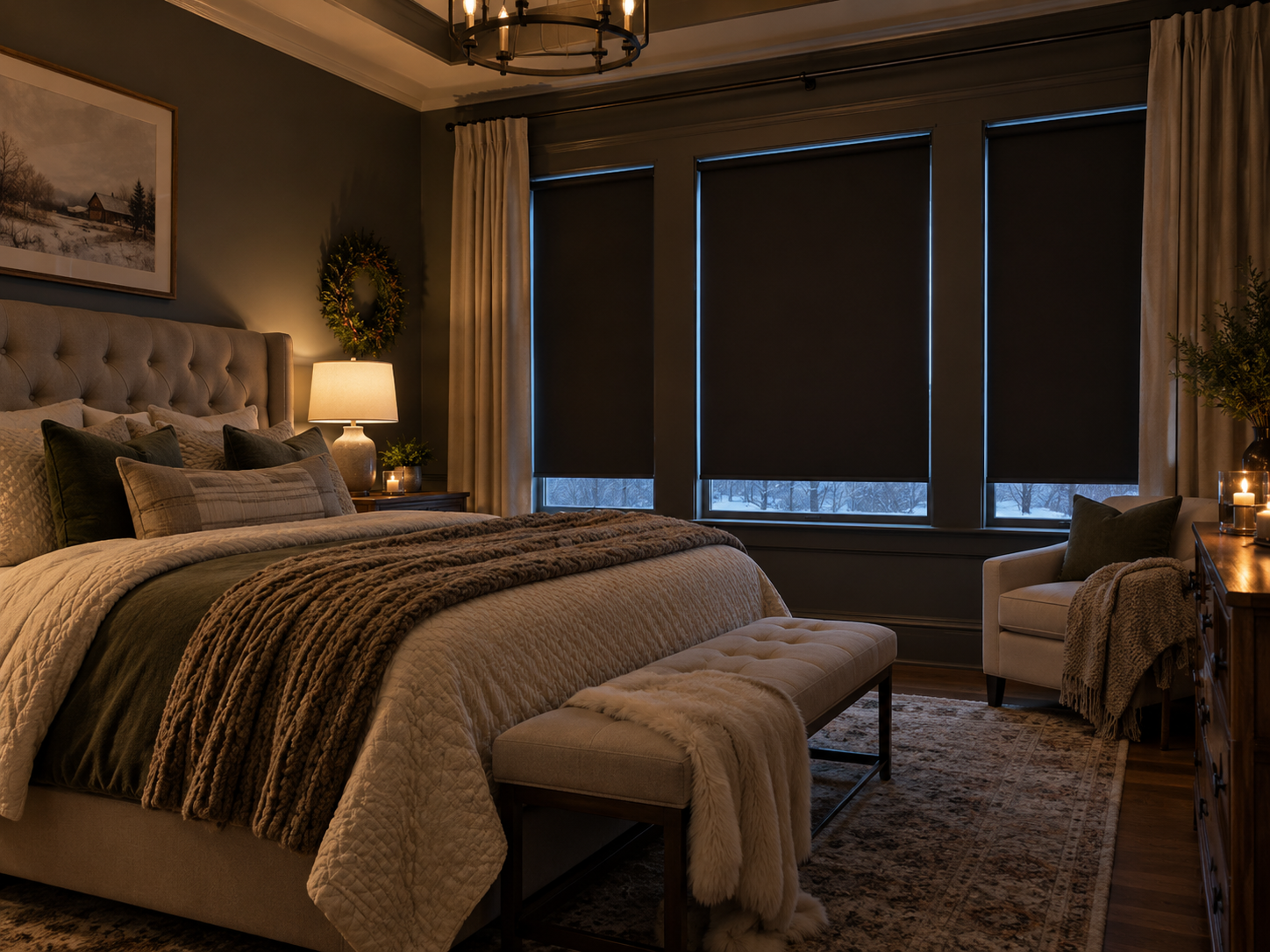
A bedroom may benefit from cellular or room-darkening shades. A living room may work better with Roman shades, shutters, or layered drapery. The goal is not to put the same product on every window but to create the right solution for the home.

Get Your Western Kentucky Home Ready for
Colder Weather
Energy-efficient window treatments can make a meaningful difference in how a room looks, feels, and functions during fall and winter. Cellular shades, Roman shades, shutters, drapery, layered treatments, and motorized shades each offer different advantages.
Simmonds Blinds and Drapes is a family-owned window treatment company serving Owensboro, Bowling Green, Beaver Dam, and surrounding Western Kentucky communities. With a mobile showroom, professional measuring, and expert installation, the team helps homeowners choose custom window treatments in the rooms where they will actually be used.
Schedule an in-home consultation with Simmonds Blinds and Drapes to explore window treatments that can help make your home more comfortable this winter.
Frequently Asked Questions
Q: What are the most energy-efficient window treatments?
A: Cellular shades are among the strongest choices because their honeycomb cells trap air between the room and the window. Roman shades, lined drapery, interior shutters, and layered window treatments can also add useful coverage and improve comfort.
Q: Do cellular shades really insulate windows?
A: Yes. Cellular shades use pockets of trapped air to create an insulating layer at the window. They are especially useful for homeowners who want better winter comfort without adding bulky window coverings.
Q: Can window treatments fix drafty windows?
A: No. Window treatments cannot repair failed seals, gaps, or other window problems. They can add another layer between the room and the glass, which may make the area around a drafty or cold window feel more comfortable.
Q: Should window shades stay open or closed during winter?
A: It depends on the time of day. Opening shades during sunny periods can allow natural light and warmth into the room, while closing them later can provide additional coverage when outdoor temperatures fall.
Q: Are motorized shades useful during winter?
A: Yes. Motorized shades make it easier to adjust window coverings as sunlight and temperatures change throughout the day. Scheduled operation can be especially useful for large, tall, or hard-to-reach windows.